





The close-grip bench press stands out as a highly effective strength training exercise specifically designed to target the triceps muscles. As a variation of the traditional bench press, its unique hand placement significantly alters the muscular emphasis, shifting it from the chest to the back of the arms. This exercise is a staple in many strength and bodybuilding routines for individuals looking to build powerful and well-defined triceps, playing
a crucial role in overall upper body strength and pushing movements.
Understanding the Mechanics and Muscle Engagement
The fundamental difference in the close-grip bench press lies in the hand position on the barbell. By placing the hands closer together than in a standard bench press, the exercise increases the range of motion and leverage on the elbow joint. This altered grip directly emphasizes elbow extension, which is the primary function of the triceps brachii muscle group. While the pectoralis major (chest) and anterior deltoids (front shoulders) are still involved as synergistic muscles, their contribution is reduced compared to a wider grip.
The triceps brachii, located on the posterior aspect of the upper arm, consists of three heads: the long head, lateral head, and medial head. The close-grip bench press effectively engages all three heads, promoting comprehensive development. The movement also involves shoulder flexion as the bar is lowered and pressed, but the dominant action remains the powerful extension of the elbows driven by the triceps.
A Key Exercise in Triceps Training Regimens
Within the broader category of strength training, the close-grip bench press is recognized as a compound exercise, meaning it involves movement at multiple joints (elbow and shoulder). This makes it a highly efficient exercise for building muscle mass and strength in the triceps. Its effectiveness is often compared to other triceps-focused compound movements.
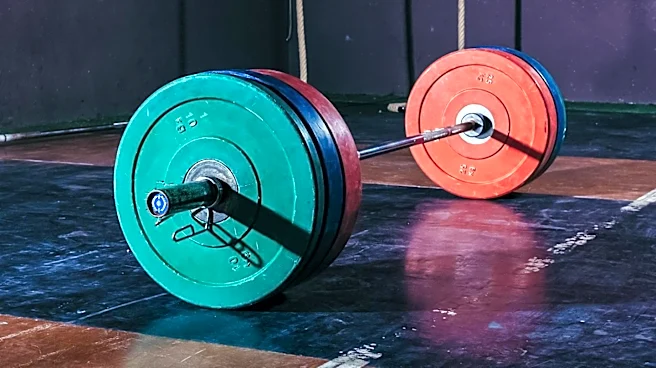
For instance, it is frequently listed alongside exercises such as the close-grip push-up and dips, both of which also heavily recruit the triceps due to their emphasis on elbow extension. While each exercise has its own unique biomechanics and potential for variation, the close-grip bench press offers the advantage of being performed with a barbell, allowing for progressive overload through increased weight. This makes it a versatile tool for athletes and lifters aiming to enhance their pushing strength and arm development.
The Role of Grip Width and Exercise Variation
The specific width of the close grip can influence the degree of triceps activation and the involvement of other muscles. A grip that is too narrow might place undue stress on the wrists, while a slightly wider, but still "close," grip can optimize triceps engagement without compromising joint health. Experimentation within a safe range is often recommended to find the most effective and comfortable hand placement for an individual.
As a variation of the traditional bench press, the close-grip bench press demonstrates how subtle changes in exercise execution can dramatically alter muscle recruitment. This principle is fundamental in strength training, allowing for targeted development of specific muscle groups. By understanding and implementing such variations, individuals can create more comprehensive and effective training programs tailored to their specific goals, with the close-grip bench press serving as a cornerstone for triceps specialization.