







Banff National Park holds the distinction of being Canada's oldest national park, a testament to the country's early commitment to preserving its natural landscapes. Established in 1885, this vast protected area is nestled within the majestic Canadian Rockies, approximately 110 to 180 kilometers (68 to 112 miles) west of Calgary, Alberta. Its creation marked a significant moment in Canadian history, setting a precedent for the establishment of a national park system
that would eventually encompass a wide array of natural and historical sites across the nation.
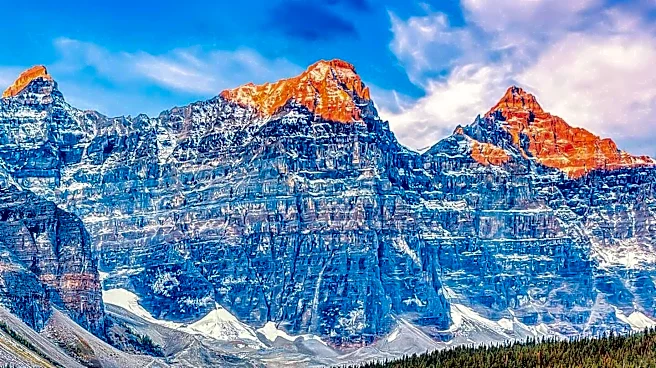
The park spans an impressive area of about 6,641 square kilometers (2,564 square miles), showcasing a diverse and breathtaking environment. Visitors to Banff can experience towering mountains, expansive glaciers, and vast ice fields, all contributing to its iconic scenery. A large coniferous forest also covers much of the park, adding to its ecological richness and providing habitat for numerous species. The town of Banff, located within the park, serves as a central hub for visitors exploring this natural wonder.
The Genesis of a National Park
The establishment of Banff National Park in 1885 was closely tied to the development of Canada's transcontinental railway. The Canadian Pacific Railway surveyors, exploring the land in 1875, discovered hot springs near Banff, Alberta. Recognizing the potential value and unique nature of these springs, the Canadian Government took action in November 1885, declaring them public property. This move was crucial in protecting these natural assets from private ownership and potential exploitation, laying the groundwork for the park's future.
This initial act of preservation sparked a broader movement in Canada towards setting aside land for public use as national parks. By the late 1880s, Thomas White, who served as Canada's Minister of the Interior and was responsible for federal land management, Indigenous affairs, and natural resources, began to push for legislative measures to formally establish Canada's first national park in Banff. This period highlights the early interplay between resource discovery, government intervention, and the burgeoning idea of conservation.
Evolution and Expansion of the Park System
The formal administration and development of national parks in Canada saw a significant milestone in May 1911 with the royal assent of the Dominion Forest Reserves and Parks Act. This legislation led to the creation of the Dominion Parks Branch, which is now known as Parks Canada. This administrative body was tasked with overseeing the national parks, ensuring their protection and management. With the Branch in place, the park system began to expand beyond Banff, moving eastward.
This expansion was guided by a dual philosophy of both use and protection, which became the foundation for national park management in Canada. The early development of these parks, including Banff, was influenced by the success of Yellowstone National Park in the United States. Canada sought to balance the conflicting ideas of preservation and commercialism, aiming to meet its natural resource needs while also addressing conservationist views and a growing public interest in outdoor recreation. This approach allowed for the commodification of parks to benefit Canada's national economy, alongside the crucial goal of conserving natural areas for both current public enjoyment and future generations.