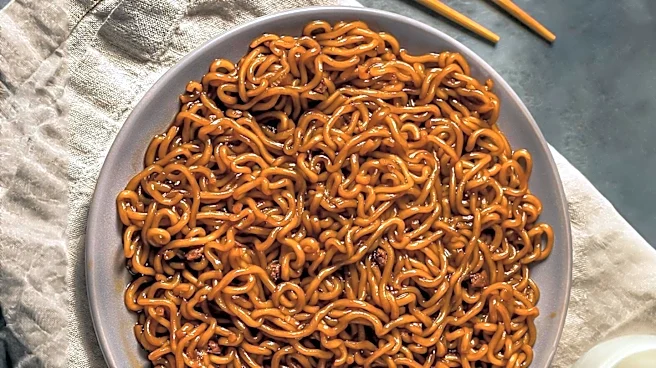






Noodles, a staple in countless cuisines worldwide today, boast a remarkably ancient history, with their earliest known origins tracing back thousands of years to China. Far from being a recent culinary invention, evidence suggests that these versatile strips of dough have been a significant part of human diets for millennia. The story of noodles begins in an unexpected archaeological discovery, revealing a food item that has stood the test of time
and traveled across continents.
Unearthing the Earliest Noodles
The most compelling physical evidence for the ancient existence of noodles comes from a discovery made in China. In 2005, a team of archaeologists reported finding an earthenware bowl containing 4,000-year-old noodles at the Lajia archaeological site. This remarkable find was attributed to the Qijia culture, providing a tangible link to early noodle production. These ancient noodles were described as bearing a resemblance to lamian, a type of traditional Chinese noodle, suggesting a long-standing culinary tradition.
Further analysis of the sediment associated with these noodles offered insights into their composition. Researchers identified husk phytoliths and starch grains as belonging to millet, specifically *Panicum miliaceum* and *Setaria italica*. This identification points to millet as the primary ingredient for these 4,000-year-old noodles. However, some researchers have expressed skepticism regarding the definitive identification of millet as the sole ingredient, citing difficulties in making pure millet noodles, questions about the direct derivation of the residue from the noodles themselves, and alterations in starch morphology after cooking that don't align with the Lajia noodles. There's also uncertainty about whether the starch-like grains are indeed starch due to some non-starch characteristics.
Written Records and the Han Dynasty
Beyond archaeological finds, written records also shed light on the early history of noodles. The earliest written account of noodles is found in a book dating back to the Eastern Han period, which spanned from 25 to 220 CE. This ancient text describes a noodle soup dish known as "tang bing." This indicates that by the Han dynasty, noodles were not only present but were also incorporated into prepared meals.
During the Han dynasty, noodles made from wheat dough became a prominent food source for the people. This suggests a widespread adoption and integration of noodles into the daily diet of the population during this significant period in Chinese history. The development of wheat-based noodle traditions in China predates their appearance in Europe, highlighting China's early and influential role in noodle culinary history.
The Silk Road and Global Spread
Food historians have noted that the practice of boiling strips of dough in water, a fundamental aspect of noodle preparation, originated in China. This tradition took hold in Europe much later, during the medieval period. Prior to this, European dough recipes were typically baked or fried, with Moorish Spain being a notable exception. The spread of noodles from China is largely attributed to the Silk Road.
Noodles traveled along this ancient trade route, reaching Central Asia and then Persia by approximately the fourth century. From Persia, Arab influence facilitated their westward journey to Sicily and Spain. It was from Sicily that noodles eventually spread to mainland Italy, sometime after the tenth century. This historical trajectory illustrates how Chinese culinary innovations, particularly noodles, diffused across vast geographical regions, influencing diverse food cultures and laying the groundwork for the global popularity of pasta and noodle dishes we see today.