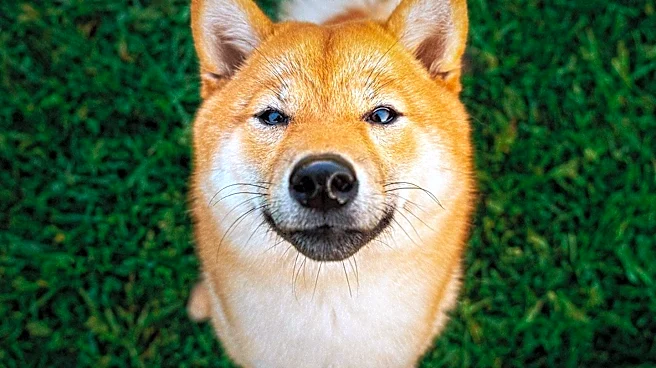

Dog behavior, the internally coordinated responses of domestic dogs to various stimuli, has been profoundly shaped by thousands of years of interaction with humans and adaptation to human lifestyles. This
long history of physical and social evolution has endowed dogs with a unique ability to understand and communicate with people. Behavioral scientists have identified a broad spectrum of social-cognitive abilities in domestic dogs, influenced by a complex interplay of physiological factors, environmental conditions, and human interaction, all contributing to their overall welfare and behavioral development. Understanding this evolutionary journey helps us appreciate the distinct characteristics that define our canine companions today.
The Mystery of Domestication and Early Divergence
The precise origin of the domestic dog, *Canis familiaris*, remains a subject of ongoing study. Whole-genome sequencing suggests that dogs, gray wolves, and the extinct Taymyr wolf diverged approximately 27,000 to 40,000 years ago. While the exact process of how dogs became domesticated is not fully clear, two primary hypotheses exist: self-domestication or human-led domestication. Evidence points to a behavioral coevolution between humans and canines, indicating a reciprocal influence over millennia. Unlike other domestic species primarily selected for production traits, dogs were initially chosen for their behaviors, a critical factor in their domestication.
A 2016 study identified only 11 fixed genes that showed variation between wolves and dogs. These genetic differences are unlikely to be solely the result of natural evolution, suggesting selection on both morphology and behavior during domestication. Many of these genes affect the catecholamine synthesis pathway, with the majority influencing the fight-or-flight response, indicating selection for tameness. These genes also play a role in emotional processing. Generally, dogs exhibit reduced fear and aggression compared to wolves. Some of these genes have even been linked to aggression in specific dog breeds, highlighting their importance in both the initial domestication process and subsequent breed formation.
Socialization and Behavioral Differences: Dogs vs. Wolves
Significant behavioral differences exist between dogs and wolves, particularly concerning socialization. The critical period for socialization in dogs begins around 4 weeks of age, when they start exploring their environment with developed senses of sight, hearing, and smell. For wolves, this exploration begins earlier, at 2 weeks, but with functional blindness and deafness, making more things novel and frightening to them. The critical period for socialization closes when an animal avoids novelty rather than approaching it. For dogs, this occurs between 4 and 8 weeks of age, while for wolves, it ends after 6 weeks, making it much harder to socialize a wolf after this point.
Dog puppies require as little as 90 minutes of human contact during their critical socialization period to form a social attachment, leading to a dog that will solicit human attention. In contrast, wolves require 24-hour contact daily, starting before 3 weeks of age. To create a socialized wolf, pups are removed from the den at 10 days old, kept in constant human contact until 4 weeks, and then spend only their waking hours with humans. This intensive process continues until 4 months, after which they can join other captive wolves but still need daily human contact to remain socialized. Even with this effort, a well-socialized wolf behaves differently from a well-socialized dog, displaying species-typical hunting and reproductive behaviors, albeit closer to humans than a wild wolf. These wolves do not generalize their socialization to all humans as a socialized dog does and remain more fearful of novelty.
Reproductive Strategies and Social Structures
Reproductive patterns also highlight the divergence between dogs and wolves. Dogs reach sexual maturity and can reproduce within their first year, whereas wolves typically mature at two years of age. Female dogs can bear another litter within 8 months of the previous one. Unlike wolves, which are generally monogamous, domestic dogs are polygamous, meaning they do not form pair bonds and may have multiple mates in a year. This lack of pair bonding and paternal care in dogs contrasts sharply with wolves, where all pack members assist the mother with pups.
This difference in reproductive strategy means wolves invest significant energy into producing a few pups, while dogs maximize pup production. The higher pup production rate allows dogs to maintain or increase their population even with a lower pup survival rate than wolves, giving them a greater capacity to recover from population crashes or colonize new habitats. This is proposed as an alternative breeding strategy adapted to a scavenging lifestyle rather than hunting. While domestic dogs generally lack paternal care, some free-roaming dogs, dingos, and semi-feral dogs have been observed to show paternal care, including regurgitating food for young and guarding litters. However, domestic dogs largely stand alone among canids in their total lack of paternal care.