







In Matt Ruff's novel 'The Mirage,' readers are transported to a world where the familiar geopolitical landscape is turned on its head. Published in 2012, this alternate history novel imagines a reality where the United States and the Middle East have swapped roles, creating a unique and thought-provoking setting. This article delves into the intricacies of this alternate world, exploring its historical developments and the implications of its altered
timeline.
The United Arab States: A New Superpower
In 'The Mirage,' the United Arab States (UAS) emerges as a dominant global power. This political entity, analogous to the real-life Arab League, declared independence from the Ottoman Empire at the end of the 19th century. Over the 20th century, the UAS expanded its influence, occupying much of the Middle East, North Africa, and northern East Africa. This alternate history sees Arabia playing a decisive role in World War II, siding with the Allies and culminating in Adolf Hitler's beheading at Nuremberg in 1946.
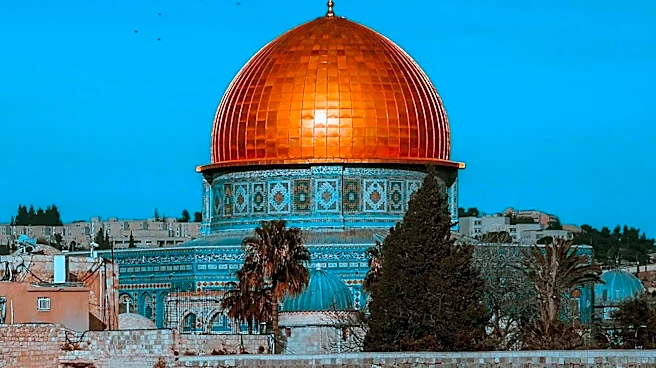
The UAS's influence extends beyond military might. In 1948, it partitioned Germany into a Jewish state, Israel, with Berlin as its capital, and a Christian state. This partition established religious districts in Jerusalem, allowing Israeli citizens to visit with special visas. The UAS and Israel become close allies in the war on terror, although Israel's relationship with its European neighbors remains strained.
A Fragmented North America
Contrasting the UAS's unity, North America is depicted as a collection of feuding third-world nations. The largest of these, the Christian States of America (CSA), comprises 17 states along the East Coast, ruled by a dictatorial Lyndon B. Johnson. The Evangelical Republic of Texas, allied with the UAS, includes Texas, Oklahoma, New Mexico, and parts of Mexico. Other regions, like the Rocky Mountains Independent Territories and the Pentecostal Gilead Heartland, are divided among tribal factions and religious groups.
This fragmented North America is marked by conflict and instability. The CSA's annexation of the Kingdom of Mississippi in 1990 and the subsequent Mexican Gulf War highlight the region's volatility. Historical events such as the Heartland War and a failed military coup led by Richard Nixon against the Kennedy Administration further illustrate the continent's tumultuous history.
The Mirage's Unique Perspective
'Ruff's novel offers a fresh perspective on familiar historical events by flipping the roles of the U.S. and the Middle East. This alternate history challenges readers to reconsider their understanding of global power dynamics and the impact of historical events. By presenting a world where the UAS is a superpower and North America is fragmented, 'The Mirage' invites readers to explore the complexities of history and the potential consequences of alternate realities.
Through its imaginative setting and thought-provoking narrative, 'The Mirage' provides a unique lens through which to examine the interplay of history, politics, and culture. This alternate history novel not only entertains but also encourages readers to reflect on the world as it is and as it might have been.