




The Kansas Speedway, situated in Kansas City, Kansas, is a modern motor racing facility distinguished by its unique tri-oval design and versatile racing configurations. Opened in 2001, the track is not merely a venue for high-speed competition but also an example of contemporary motorsport engineering. Its design incorporates specific banking angles and multiple track layouts, including a primary oval and an integrated road course, all crafted to challenge
drivers and provide an engaging spectacle for fans. These features are central to its identity as a premier racing destination in the Midwest.
The Tri-Oval and its Banking Dynamics
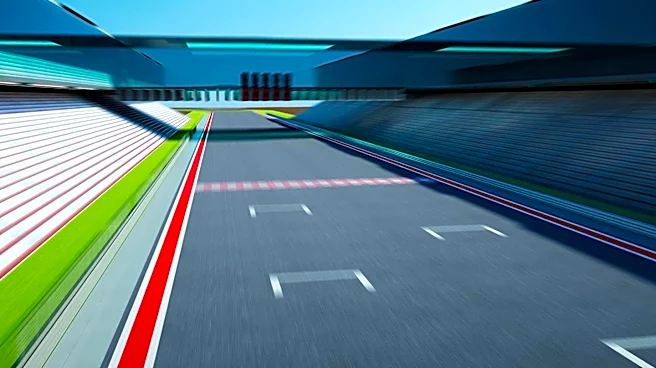
The core of the Kansas Speedway is its 1.5-mile tri-oval track, a design characteristic of many modern American speedways. This intermediate-length oval is engineered for high speeds and competitive racing. A critical aspect of its design lies in the banking, or the angle at which the track surface is tilted in the turns and straightaways. Initially, the track featured a constant banking in its turns. However, significant renovations completed in 2012 introduced a progressive banking system. This means that the angle of the turns varies, starting at 15 degrees and increasing to 20 degrees. This progressive banking allows drivers to choose different lines through the corners, potentially leading to more side-by-side racing and strategic maneuvers.
Beyond the turns, the straightaways also incorporate banking. The back straightaway of the Kansas Speedway is designed with a 5-degree banking, providing a slight incline that can influence vehicle stability and speed. The front straightaway, where the start/finish line is located, features a banking that ranges from 9 to 11 degrees. These specific banking angles across the entire oval are meticulously calculated to optimize racing conditions, manage tire wear, and contribute to the overall speed and safety of the events held there. The tri-oval shape itself, with its distinct third turn, is a common feature in NASCAR-style tracks, designed to offer better sightlines for spectators and a unique challenge for drivers compared to traditional ovals.
The Integrated Road Course Configuration
In addition to its primary tri-oval, the Kansas Speedway boasts an integrated road course within its infield. This road course was a key component of the 2011-2012 renovation project, which also included the repaving of the main oval. The creation of this "Roval" layout significantly expanded the track's versatility, allowing it to host a wider array of motorsport events beyond traditional oval racing. The road course is 2.37 miles (3.814 kilometers) in length and features six distinct turns. This configuration introduces elements of road racing, such as left and right-hand turns, elevation changes, and complex braking zones, which are not present on the oval.
The inclusion of a road course within the infield of an oval track is a growing trend in motorsport, providing facilities with the flexibility to host different racing series, including sports car racing and potentially open-wheel events that require a more technical circuit. The design of the Kansas Speedway's road course complements its oval counterpart, offering a contrasting challenge that tests different aspects of a race car's performance and a driver's skill set. This dual-configuration capability ensures the Kansas Speedway remains a modern and adaptable venue in the competitive landscape of American motor racing.