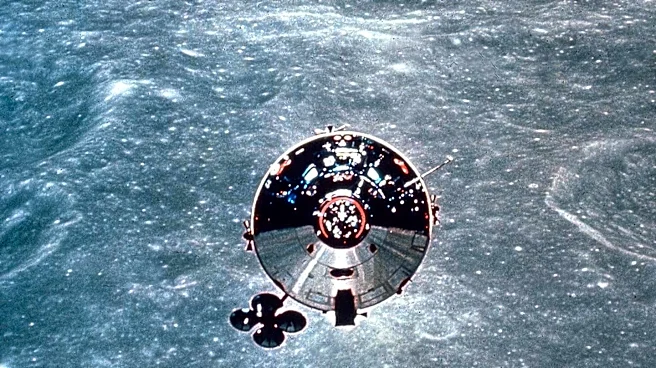







Apollo 7, launched on October 11, 1968, marked a pivotal moment in NASA's Apollo program as its first crewed mission. This flight was not aimed at the Moon, but rather at thoroughly testing the redesigned Block II Apollo Command/Service Module (CSM) in Earth orbit. The mission's success was paramount, as it needed to demonstrate the reliability of the spacecraft's life-support, propulsion, and control systems, thereby restoring confidence in the program after
the tragic Apollo 1 fire. The crew's diligent work during this "open-ended" mission, which could be extended as each test was passed, laid the groundwork for the ambitious lunar missions that would follow.
Launch from Cape Canaveral
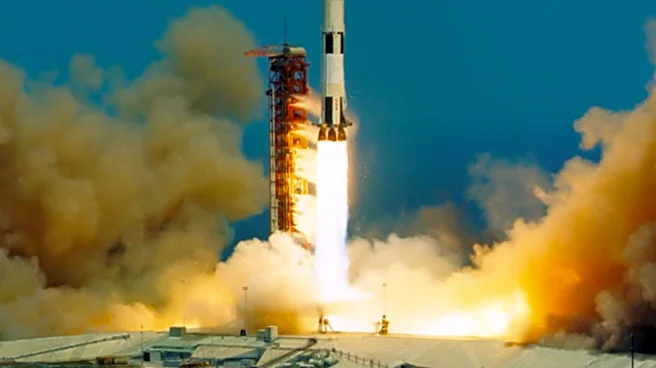
The launch of Apollo 7 took place from Cape Canaveral Launch Complex 34, utilizing a Saturn IB launch vehicle. This particular launch vehicle was chosen for its capability to propel the CSM into Earth orbit for the extensive testing required. The Saturn IB, a powerful rocket in its own right, was a critical component in the early phases of the Apollo program, proving the flightworthiness of the spacecraft before the more powerful Saturn V was employed for lunar trajectories. The successful liftoff was a significant step, signaling NASA's return to crewed spaceflight after a period of intense redesign and safety improvements.
Following the launch, the mission immediately began its rigorous testing schedule. The crew, consisting of Commander Wally Schirra, Command Module Pilot Donn F. Eisele, and Lunar Module Pilot Walter Cunningham, had a comprehensive list of objectives. These included evaluating the spacecraft's performance, verifying the functionality of all major systems, and ensuring the crew's ability to operate effectively in the space environment. The initial phases of the mission focused on these critical checks, setting the tone for the demanding eleven-day flight.
Extensive Systems Testing in Orbit
Once in Earth orbit, the Apollo 7 crew embarked on an exhaustive series of tests for the Block II CSM. A primary objective was to thoroughly check the life-support systems, ensuring they could sustain the astronauts for extended periods. This involved monitoring environmental controls, oxygen levels, and waste management, all crucial for future long-duration lunar missions. The propulsion system, particularly the Service Propulsion System (SPS) engine, also underwent multiple firings to confirm its reliability and thrust capabilities, which would be essential for lunar orbit insertion and trans-Earth injection on later missions.
Guidance and control systems were another major focus. The crew meticulously evaluated the spacecraft's navigation, attitude control, and maneuvering capabilities. This included practicing rendezvous procedures, even though Apollo 7 did not carry a Lunar Module. The "open-ended" nature of the mission allowed for flexibility, enabling the crew to extend tests as needed to gather sufficient data. This thoroughness was vital for building the necessary confidence in the spacecraft's design and operational procedures, directly influencing the decision to proceed with Apollo 8's lunar orbit mission.
Addressing the SLA Panel Issue
During the mission, a minor but significant issue arose concerning one of the Spacecraft-Lunar Module Adapter (SLA) panels. While Apollo 7 did not carry a Lunar Module, the SLA panels were designed to open to a 45-degree angle. The crew observed that one panel did not fully open as intended. This observation, though not critical for Apollo 7, raised concerns about potential collision risks during the docking and extraction of the Lunar Module in future lunar missions. Commander Wally Schirra famously compared this partially open panel to the "angry alligator" from Gemini 9, highlighting the potential hazard.
This incident prompted a redesign of the SLA separation system. Subsequent missions incorporated a spring-loaded hinge release system. This improved design ensured that the panels would not only open to the full 45-degree angle but also be pushed away from the S-IVB stage at a velocity of approximately 5 mph. This modification created a safe distance between the spacecraft and the jettisoned panels, mitigating the risk of collision during the critical docking and extraction maneuvers. This attention to detail, even for issues not directly impacting the current mission, underscored the rigorous safety culture of the Apollo program.