



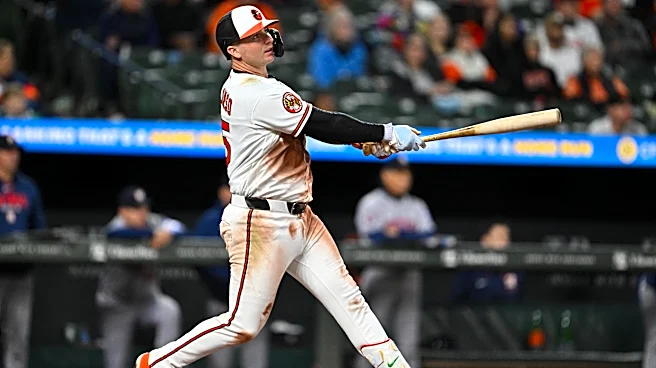

Brooks Robinson's career with the Baltimore Orioles from 1960 to 1965 marked a pivotal period where he solidified his role as an everyday player and began to establish himself as one of baseball's premier defensive third basemen. During these years, Robinson not only became a consistent presence in the Orioles' lineup but also started accumulating individual accolades, including his first Gold Glove Awards and an American League Most Valuable Player
(MVP) award. His performance during this era laid the groundwork for his legendary status in the sport, showcasing both his offensive contributions and his unparalleled defensive skills.
Establishing an Everyday Role and Defensive Reputation
By 1960, Brooks Robinson had firmly established himself as the Orioles' starting third baseman. That year, he finished third in the American League MVP voting, trailing only Roger Maris and Mickey Mantle, which highlighted his growing impact on the team. He was also recognized by Baltimore sportscasters and sportswriters as the Most Valuable Oriole, a testament to his importance to the club. Crucially, 1960 marked the beginning of an extraordinary streak for Robinson, as he won the first of his 16 consecutive Gold Glove Awards at third base, immediately signaling his defensive excellence.
Robinson's defensive reputation continued to grow in 1961. Sportswriter Bob Addie noted that "The 'young old-timers' in the press box are beginning to compare Baltimore's Brooks Robinson with the great third basemen of the past," indicating the high regard in which his fielding was held. Beyond his defensive prowess, Robinson also demonstrated his durability and offensive consistency, being one of only two players in the American League to appear in every game of the season. He batted .287 with 192 hits, placing him second in the league, and added seven home runs, further cementing his value as a well-rounded player.
The Peak of Offensive and Defensive Excellence: The 1964 MVP Season
The year 1964 stands out as a career-best season for Brooks Robinson, particularly for his offensive output. Maxwell Kates of the Society for American Baseball Research described it as "Robinson had perhaps his best season in 1964." During this remarkable year, Robinson played all but two innings of Baltimore's 163-game season, showcasing his incredible stamina and commitment. He achieved a .317 batting average and hit 28 home runs, both significant offensive numbers for a third baseman.
His offensive performance in 1964 was capped by leading the American League with 118 runs batted in (RBI), a statistic that directly contributed to his recognition as the American League MVP Award winner. This award underscored his dual threat capabilities, combining his already legendary defense with a potent bat. While his batting average dipped slightly to .297 by the end of 1965, after batting over .300 for much of the season, he still led Baltimore in both batting average and RBIs with 80, demonstrating his continued importance as a key offensive contributor for the Orioles during this formative period of his career.