




The Apollo 12 mission was not just a triumph of engineering and scientific endeavor; it was also a testament to the dedication, skill, and personalities of its crew. Commander Pete Conrad, Lunar Module Pilot Alan Bean, and Command Module Pilot Richard Gordon formed a cohesive team, whose extensive training and individual experiences were crucial to overcoming challenges and achieving the mission's ambitious goals. From the unique circumstances of Bean joining
the crew to Conrad's memorable first words on the Moon, the human element played a central role in shaping the narrative of Apollo 12.
Forming the Crew: A Twist of Fate
The composition of the Apollo 12 crew had an unexpected turn. Originally, Clifton C. Williams Jr. was assigned as the Lunar Module pilot to work with Pete Conrad. However, Williams tragically died in October 1967 when his T-38 jet crashed. This unfortunate event opened the door for Alan L. Bean to join the crew. Conrad had initially wanted Bean, a former student of his at test pilot school, but Director of Flight Crew Operations Deke Slayton had deemed Bean unavailable due to an assignment to the Apollo Applications Program. After Williams's death, Conrad requested Bean again, and this time Slayton agreed.
Alan Bean, 37 years old at the time of the mission, brought a strong background to the team. He had graduated from the University of Texas in 1955 with a degree in aeronautical engineering and was also a naval aviator. Selected as an astronaut in 1963 alongside Richard Gordon, Apollo 12 marked Bean's first flight into space. The three Apollo 12 crew members had previously served as the backup crew for Apollo 9 earlier in 1969, providing them with valuable experience and cohesion. Richard Gordon, the Command Module Pilot, was also a naval aviator selected in 1963. His role involved piloting the Command Module, Yankee Clipper, while Conrad and Bean descended to the lunar surface in the Lunar Module, Intrepid. The all-Navy crew chose sea-related call signs for their modules, with Yankee Clipper proposed by George Glacken and Intrepid suggested by Robert Lambert, reflecting themes of pride, prestige, determination, fortitude, and endurance.
Rigorous Training for Lunar Exploration
The preparation for Apollo 12 was extensive, building upon lessons learned from Apollo 11. More time was allocated for geologic training for Apollo 12 than for its predecessor. Conrad and Bean undertook several geology field trips, practicing as if they were on the Moon. During these trips, they collected samples, documented them with photographs, and communicated with a CAPCOM and geologists who were out of sight in a nearby tent. Their performance in choosing samples and taking photographs was then critiqued. Initially, scientists frequently changed photo documentation procedures, leading Conrad to eventually require that no more changes be made after the fourth or fifth revision. After Apollo 11's return, the Apollo 12 crew also had the opportunity to view lunar samples and receive briefings from scientists.
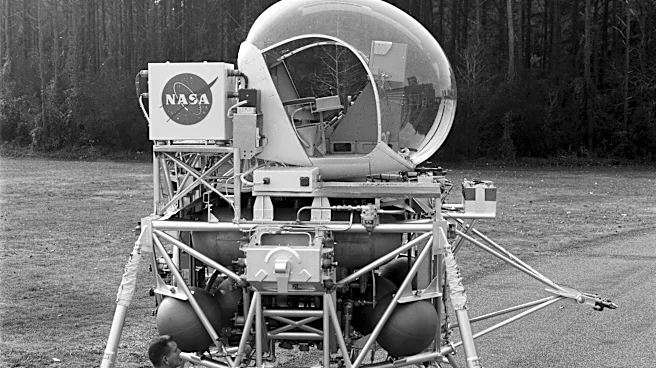
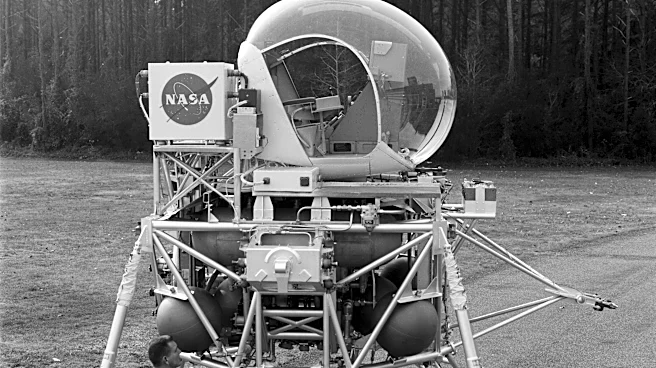
The astronauts dedicated an immense amount of time to mission-specific training, spending five hours in preparation for every hour they expected to be in flight, totaling over 1,000 hours per crew member. This was significantly more mission-specific training than Neil Armstrong and Buzz Aldrin received for Apollo 11. This was in addition to the 1,500 hours of training they had already accumulated as backup crew members for Apollo 9. Their training included over 400 hours per crew member in simulators for both the Command Module and the Lunar Module. Some simulations were linked in real-time to flight controllers in Mission Control. To practice lunar landings, Conrad flew the Lunar Landing Training Vehicle (LLTV), a decision that continued despite Neil Armstrong having to eject from a similar vehicle in 1968. The crew generally felt that their training adequately prepared them for the demanding lunar mission.
Memorable Moments and Personal Touches
The personalities of the crew members added memorable moments to the mission. When Pete Conrad, the shortest man among the initial groups of astronauts, stepped onto the lunar surface, his first words were, "Whoopie! Man, that may have been a small one for Neil, but that's a long one for me." This was not an impromptu remark; Conrad had made a US$500 bet with reporter Oriana Fallaci that he would say these words, after she questioned whether NASA had instructed Neil Armstrong on what to say. Conrad later stated he was never able to collect the money. Another personal touch involved a secret. Conrad and Bean brought an automatic timer for their Hasselblad cameras without informing Mission Control, hoping to take a selfie with the Surveyor 3 probe. However, when the moment arrived, they couldn't locate the timer among the lunar samples they had already placed in their Hand Tool Carrier. These anecdotes highlight the human spirit and individual character that were integral to the Apollo 12 mission.