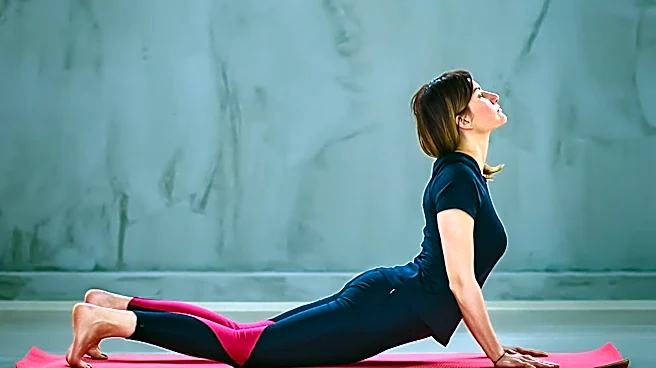




Salamba Bhujangasana, often referred to as the Supported Cobra pose or Sphinx pose, is a foundational backbend in yoga that offers a gentler alternative to more intense variations. This pose is characterized by the forearms resting on the ground, which helps to reduce the intensity of the backbend, making it accessible to a wider range of practitioners. It is a versatile posture, finding its place in various yoga styles, particularly those that emphasize
longer holds and a more meditative approach.
Understanding the Core Pose and its Entry
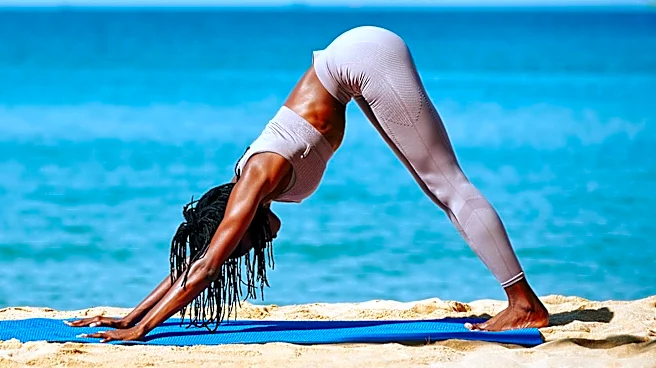
The essence of Salamba Bhujangasana lies in its supported nature. Unlike the full Cobra pose (Bhujangasana), where the arms are often straightened to deepen the backbend, the Supported Cobra keeps the forearms grounded. This provides stability and limits the spinal extension, making it a beneficial pose for those new to backbends or seeking a less strenuous experience. The pose can be entered from a prone position, lying face down on the mat, or from Downward Dog, a common transition in many yoga sequences.
To enter the pose from a prone position, practitioners typically place their palms under their shoulders. From here, they push down with their hands until their hips lift slightly, indicating the beginning of the backbend. The tops of the feet remain on the ground, and the legs are outstretched, ensuring a stable base. The gaze is directed forwards, maintaining a neutral neck position initially. This careful entry helps to protect the lower back and allows the practitioner to gradually ease into the spinal extension.
Variations and Modifications for Diverse Needs
Salamba Bhujangasana is highly adaptable, with several modifications available to suit individual needs and physical conditions. One notable variation is its use in Yin Yoga, where the pose is held for extended periods. In Yin Yoga, the forearms remain on the ground, or the arms can be straightened for a deeper, yet still supported, backbend. This long-hold approach in Yin Yoga aims to apply moderate stress to the body's connective tissues, such as tendons, fascia, and ligaments, to improve circulation in the joints and enhance flexibility.
Another important modification addresses specific circumstances, such as pregnancy. For pregnant practitioners, placing a blanket under the pelvis can provide additional support and comfort, allowing them to safely enjoy the benefits of the pose. Experienced yogis may also explore more advanced variations, such as positioning their legs in a lotus position (Padmasana) while in the Supported Cobra, which adds an element of hip opening to the backbend. These modifications highlight the pose's versatility and its ability to be tailored to different levels of experience and physical requirements.
Distinguishing Salamba Bhujangasana from Related Poses
While Salamba Bhujangasana shares similarities with other backbending poses, it has distinct characteristics. It is considered an easier variant of the traditional Cobra pose (Bhujangasana). In the full Cobra pose, the practitioner actively curves the spine upward using both the arms and lower back muscles, often reaching back strongly with the legs. In contrast, the Supported Cobra, or Sphinx pose, involves a less pronounced backbend due to the forearms remaining on the ground, which reduces the spinal flexion.
Another related pose is the Seal pose, often found in Yin Yoga, which is described as a more advanced version of the Sphinx. In the Seal pose, the arms are fully extended, leading to a deeper backbend. However, the Seal pose is performed differently from Bhujangasana. In Seal pose, the upward movement of the trunk is gradual and entirely supported by the arms, with the legs relaxed. This contrasts with Bhujangasana, where the practitioner actively engages the lower back muscles and legs. Furthermore, unlike Urdhva Mukha Svanasana (Upward-Facing Dog), in Salamba Bhujangasana, the legs and thighs remain on the ground, emphasizing a different type of spinal extension and engagement.