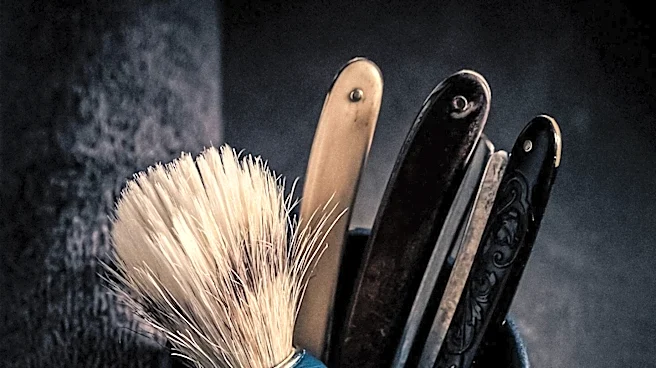







Before King C. Gillette's revolutionary invention, personal shaving was a daily ritual that demanded skill and maintenance. Men typically used straight razors, which required constant sharpening on a leather strop to maintain their edge. The existing razor blades were not only relatively expensive but also dulled quickly, making the process cumbersome and time-consuming. This landscape of personal grooming was ripe for innovation, and Gillette, an American
entrepreneur, recognized a profound need for a more convenient and efficient shaving solution. His contribution, the double-edged safety razor with a thin, inexpensive, disposable blade of stamped steel, fundamentally altered how men approached their daily shave and left an indelible mark on the history of personal care.
The Pre-Gillette Shaving Landscape
In the mid-19th century, safety razors had already begun to emerge, offering a safer alternative to the open-bladed straight razor. However, these earlier designs still relied on forged blades, which, while an improvement, shared many of the same drawbacks as traditional razors regarding cost and maintenance. The Kampfe Brothers, for instance, introduced a type of safety razor in the 1870s. While these products represented steps forward, they did not fully address the core issue of blade longevity and affordability. The idea of a truly disposable blade, one that could be used and then discarded, was the missing piece that would unlock mass market appeal and convenience.
Gillette's inspiration for a disposable product came from an unlikely source: bottle caps. While working for the Crown Cork and Seal Company, he observed the disposable nature of bottle caps and was advised by the company's founder, William Painter, to invent something similar—a product that, once used, would be thrown away, ensuring repeat business. This concept, combined with the evident need for a better shaving experience, spurred Gillette to envision a razor with a blade that could be easily replaced.
Engineering the Disposable Blade
The most significant challenge in bringing Gillette's vision to life was the engineering of the disposable blade itself. Creating a thin, inexpensive steel blade that could be effectively sharpened proved to be a complex task. This difficulty explains the considerable delay between Gillette's initial concept and the product's market introduction. Steven Porter, a machinist collaborating with Gillette, played a crucial role in translating Gillette's designs into the first functional disposable razor blade. Further refinements were made by William Emery Nickerson, an expert machinist and partner, who improved the razor's handle and frame to better support the delicate steel blade.
Nickerson's contributions extended beyond design; he also developed the specialized machinery necessary for the mass production of these blades and secured patents for the critical processes of hardening and sharpening them. These technological advancements were vital for achieving the scale and cost-effectiveness required for a disposable product. The Gillette razor, despite its initial price of $5 (a substantial sum at the time, equivalent to half a working man's weekly wage), quickly gained popularity, selling millions of units. This success was driven by its innovative design, automated manufacturing, and strategic advertising.
Market Dominance and Lasting Legacy
King C. Gillette established the American Safety Razor Company in 1901, later renamed the Gillette Safety Razor Company. Initial sales in 1903 were modest, with 51 razors and 168 blades sold. However, by the following year, sales surged to 90,884 razors and 123,648 blades, demonstrating rapid market acceptance. By 1908, the company had expanded internationally, setting up manufacturing facilities in Canada, Britain, France, and Germany. By 1915, razor sales reached 450,000 units, and blade sales exceeded 70 million units, solidifying Gillette's dominance in the shaving market.
The company's influence grew further during World War I when the U.S. government provided all American soldiers with a Gillette field razor set. This widespread distribution introduced millions of men to the convenience of the disposable razor, cementing its place in daily life. Even after King C. Gillette sold his stake in the company, his name and image remained central to the brand, with his portrait appearing on blade packets worldwide. This made him a universally recognized figure, often surprising people who assumed he was merely a marketing image. The Gillette Company, through its continuous innovation and global reach, transformed shaving from a potentially hazardous and tedious chore into a quick, safe, and accessible part of personal grooming for millions.