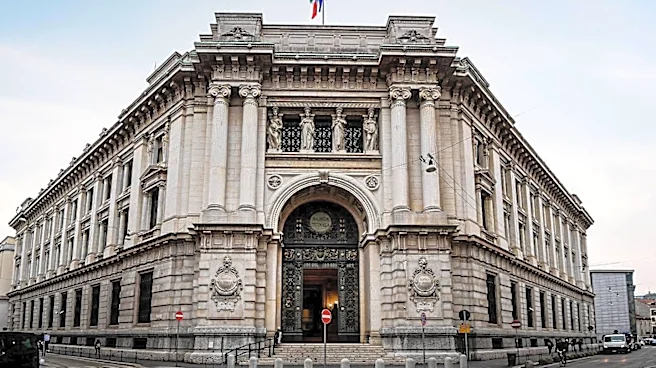



The Bank of Italy Building in San Francisco, also known as the Clay-Montgomery Building, stands as a significant landmark with a rich history tied to the financial development of California. This eight-story structure became the headquarters for A. P. Giannini's Bank of Italy, the precursor to Bank of America, in 1908. Its establishment followed the devastating 1906 San Francisco earthquake and fire, which necessitated the construction of a new, more
permanent home for the burgeoning bank. Designated a National Historic Landmark in 1978, the building is recognized for its deep association with Giannini, a figure who profoundly revolutionized retail banking in the early 20th century. Its story is one of resilience, architectural ambition, and evolving purpose within the city's financial landscape.
Rising from the Ashes: Post-Earthquake Origins
The catastrophic 1906 San Francisco earthquake and fire left much of the city in ruins, including the Bank of Italy's original building on Montgomery Avenue, located in the North Beach neighborhood. In the immediate aftermath, the bank's operations were temporarily relocated to two makeshift sites: one on the Washington Street wharf and another at the home of Giannini's brother on Van Ness Avenue. These temporary arrangements underscored the urgent need for a more stable and permanent base for the bank's crucial services.
Shortly after, more permanent, though still interim, accommodations were secured in a building on Montgomery Avenue, close to the site of the original headquarters. During this period of recovery and reorganization, A. P. Giannini and the bank's directors made the pivotal decision to construct their own dedicated bank building. A parcel of land was acquired for $125,000 at the prominent corner of Clay and Montgomery streets. However, the immense financial demands placed on the bank's funds in the wake of the fires meant that construction could not commence for nearly a year after the land purchase, highlighting the challenging economic environment of the time.
Architectural Grandeur and Design
The task of designing this new, resilient headquarters fell to Frank T. Shea of the architectural firm Shea & Lofquist. The resulting eight-story structure was conceived to project an image of stability and permanence, crucial for a financial institution serving a city in recovery. The building's facade showcases a thoughtful use of materials, with the ground floor constructed from robust granite cladding. This choice of granite provided a strong, durable base, reflecting the bank's foundational strength.
Above the ground floor, the upper levels feature less expensive terra-cotta, meticulously crafted to mimic the design forms and aesthetic of the granite below. This clever use of materials allowed for an impressive visual continuity while managing construction costs. The interior of the Bank of Italy Building was designed to be equally striking, described as a “jewel box.” It boasts white marble and intricate gold leaf detailing, creating an opulent and welcoming atmosphere for customers. A spectacular coffered ceiling further enhances the interior's grandeur, contributing to an overall sense of elegance and importance.
A Century of Evolving Roles
The Bank of Italy Building officially opened its doors on August 17, 1908, marking a significant milestone in the bank's history and San Francisco's recovery. For over a decade, it served as the primary headquarters for the Bank of Italy, playing a central role in the institution's rapid growth and expansion. However, by 1921, the bank's operations had outgrown the building, leading to a relocation of its headquarters to a newer, larger facility at 1 Powell Street.
Despite the move of the main headquarters, the Clay-Montgomery Building continued its important role in Giannini's financial empire. It subsequently became the headquarters for his Liberty Bank System, demonstrating its continued utility and significance within his broader banking network. In the 1930s, as the Bank of Italy transitioned into Bank of America, the building adapted once more, becoming a Bank of America branch. This ensured its ongoing connection to the institution it helped establish. More recently, on September 4, 2012, the building embraced a new chapter when men's luxury retailer Wingtip opened a retail location on its ground floor, offering tailoring and barber services in the basement vault, showcasing the building's adaptability and enduring presence in San Francisco's commercial landscape.