





The Daytona Normal and Industrial School, initially known as the Daytona Educational and Industrial Training School for Negro Girls, holds a significant place in American educational history. Established in 1904 by Mary McLeod Bethune in Daytona Beach, Florida, this institution was founded with a clear mission to provide education and industrial training. Its journey from a small boarding school to a foundational component of a university reflects
a remarkable story of growth, resilience, and dedication to educational advancement.
Founding and Early Growth
Mary McLeod Bethune moved to Daytona in 1904 with the specific purpose of founding her own school. She started the Daytona Educational and Industrial Training School for Negro Girls in a house located near the railroad tracks. The school began modestly, initially serving just five girls and Bethune's own son. This humble beginning quickly blossomed, demonstrating the urgent need and strong demand for such an institution. Within a mere two years of its establishment, the school had expanded significantly, with four teachers instructing a student body of 250.
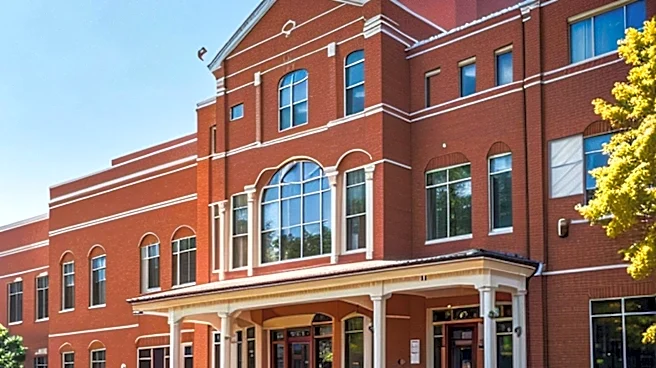
The rapid growth necessitated larger facilities. In 1907, Faith Hall was constructed to accommodate the increasing number of students and staff. However, even this new building proved insufficient within seven years, indicating the continuous expansion of the school's reach and influence. By 1916, the school moved into an even larger and more permanent home, White Hall, a distinguished Georgian Revival architecture brick building. This progression from a small house to purpose-built facilities underscores the dynamic development and success of Bethune's vision.
Evolution of Identity and Mission
Over the years, the school's name evolved, reflecting its expanding scope and changing educational landscape. While initially known as the Daytona Educational and Industrial Training School for Negro Girls, by 1912, it was referred to as the Daytona Normal and Industrial Institute. This change likely signified a broader curriculum or a more formalized structure in its educational offerings. Further evolution occurred by 1919, when the institution became known simply as Daytona Normal School, suggesting a continued focus on teacher training and standardized education.
This period of name changes culminated in a pivotal merger in 1923. The Daytona Normal and Industrial Institute for Girls merged with the Cookman Institute for Boys, an institution founded in Jacksonville in 1872 by Rev. D.S. Darnell. This merger created the Daytona Cookman Collegiate Institute, marking a significant step towards co-education and a broader academic scope. The new institution became affiliated with the Board of Education of the Methodist Church, further solidifying its institutional backing and future direction. By 1931, the school had developed into a junior college, and by 1941, it became a four-year college offering a baccalaureate program in Liberal Arts and Teacher Education, eventually becoming Bethune–Cookman University. This transformation illustrates a continuous commitment to educational advancement and adaptation to meet the needs of its students and the community.
Challenges and Triumphs
Mary McLeod Bethune's work extended beyond the classroom; she was also actively involved in social and political movements, including voter registration and campaigning for women's suffrage. Her dedication to her school and her community was so profound that her institution was reportedly threatened by the Ku Klux Klan. In response to these threats, Bethune stood vigil to protect her school, demonstrating immense courage and resolve. This act of defiance highlights the challenging environment in which the school operated and the personal risks Bethune undertook to ensure its survival and success. The school's ability to not only endure but thrive in such circumstances speaks volumes about the strength of its foundation and the unwavering commitment of its leadership.