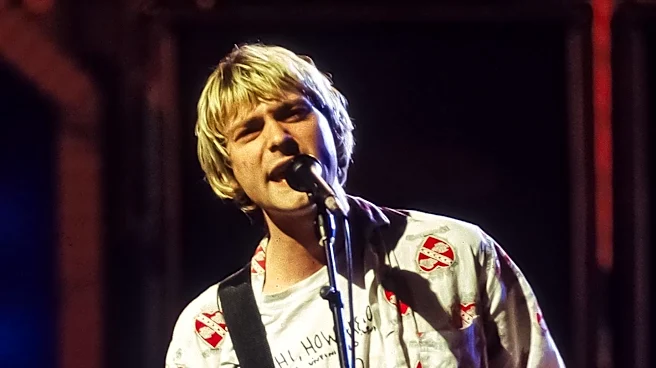



Nirvana's "MTV Unplugged in New York," released on November 1, 1994, by DGC Records, stands as a significant moment in the band's history and in the legacy of the MTV Unplugged series. Recorded on November 18, 1993, at Sony Music Studios in Hell's Kitchen, Manhattan, this live album captured a mostly acoustic performance that defied the unspoken rules of the show. Unlike many artists who used the Unplugged platform to showcase their greatest hits,
Nirvana opted for a setlist rich in lesser-known material and cover versions, including songs by David Bowie, Lead Belly, Meat Puppets, and the Vaselines. This choice, coupled with the band's initial reluctance and unique stage design, created a performance that was both critically acclaimed and deeply personal.
Challenging the Unplugged Convention
The MTV Unplugged format typically encouraged artists to perform their well-known songs in a more intimate, acoustic setting. However, Nirvana, despite being one of the most iconic bands of the decade, chose a different path. The band made a deliberate decision to focus on less familiar tracks and a significant number of cover songs, a move that initially caused friction with MTV executives. Executive producer Joel Stillerman expressed concern that the band was missing a major opportunity by not including more of their popular compositions, particularly material from their album *Nevermind*, though he clarified that the main hit "Smells Like Teen Spirit" was not the focus of their insistence. This creative difference led to tension, with Kurt Cobain at one point refusing to perform the day before filming.Nirvana's decision to largely avoid their major hits was partly practical. Drummer Dave Grohl noted that "Smells Like Teen Spirit" would have sounded "stupid" in an acoustic format. The band concluded that many of their hits simply would not translate well to an unplugged arrangement, preferring to select songs that were better suited for the acoustic setting. This approach highlighted their artistic integrity and their desire to present a different side of their musicality, rather than simply recreating their electric sound in an acoustic form. This commitment to their vision ultimately contributed to the unique and enduring quality of the performance.
The Band's Apprehension and Preparation
Participating in MTV Unplugged was not an easy decision for Nirvana. The band members harbored doubts about their musical mastery and questioned whether they should engage with what they perceived as a corporate television program. Kurt Cobain, in particular, was nervous about the prospect of performing a fully acoustic concert. Jeff Mason, the Unplugged manager, bluntly stated that Cobain was "terrified." This apprehension was compounded by the recent experience of Stone Temple Pilots, whose own Unplugged taping had taken over four hours due to the need to re-record every song, leading to negative buzz in journalistic circles.Producer Alex Coletti took proactive steps to ease the band's concerns, even traveling to a Nirvana concert in Massachusetts to discuss the upcoming taping. He brought an acoustic Guild bass, a difficult-to-obtain instrument that had been used in other Unplugged shows, specifically for Krist Novoselic, who did not own one. Coletti's efforts to engage with the band and address their technical needs were crucial in building trust. During rehearsals, Cobain clashed with MTV management over the song selection, further highlighting the band's desire for creative control and their discomfort with external pressures. The band felt out of their element, with Cobain worrying that the sound was too "heavy" for the Unplugged format, leading to fears among the crew that he might cancel the show entirely.
A Funeral Aesthetic and Unexpected Amplification
Cobain's vision for the stage design further underscored the performance's departure from typical Unplugged aesthetics. When asked about his preferences for decorations, Cobain suggested Stargazer lilies, black candles, and a crystal chandelier. This led producer Alex Coletti to ask if he meant it to look "like a funeral," to which Cobain responded, "Exactly. Like a funeral." This somber, almost funereal atmosphere, combined with the band's choice of material, contributed to later interpretations of the concert as a "pre-mortem" for Cobain.Despite the "unplugged" premise, Nirvana's performance was not entirely acoustic. Unlike previous concerts in the series, the band utilized electric amplification and guitar effects. This subtle deviation from the pure acoustic format allowed them to maintain some of the dynamic range and texture characteristic of their sound, while still adhering to the intimate nature of the show. The careful balance between acoustic purity and subtle electronic enhancement demonstrated Nirvana's innovative approach to the Unplugged concept, creating a performance that was both raw and meticulously crafted, ultimately earning them a Grammy Award for Best Alternative Music Performance in 1996.