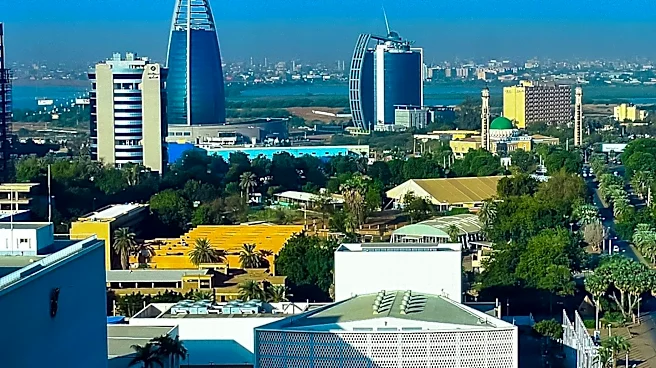







Operation Infinite Reach, the U.S. military response to the 1998 embassy bombings, included a controversial cruise missile strike on the Al-Shifa pharmaceutical factory in Khartoum, Sudan. On August 20, 1998, the facility was destroyed by U.S. missiles, based on intelligence suggesting it was a chemical weapons facility linked to al-Qaeda and Osama bin Laden. This strike, however, quickly became a focal point of international criticism and debate,
with many questioning the validity of the U.S. evidence and the humanitarian consequences of destroying a major source of medicine for Sudan.
Rationale for the Strike
The U.S. decision to target the Al-Shifa plant stemmed from intelligence that suggested financial ties between the factory and Osama bin Laden. The plant was a significant producer, responsible for over half of Sudan's pharmaceuticals. A key piece of evidence cited was a soil sample collected from Al-Shifa, which allegedly contained a chemical used in the manufacturing of VX nerve gas. Based on these suspicions, the U.S. believed the factory was linked to and producing chemical weapons for bin Laden and his al-Qaeda network. The aim was to completely destroy the plant and any dangerous substances it might contain.
Former Secretary of Defense Cohen defended the decision in his 2004 testimony to the 9/11 Commission. He stated that the intelligence community had repeatedly assured them at the highest level that the confidence in the intelligence conclusion regarding this "hard target" was as good as it gets. This confidence was based on multiple, reinforcing elements of information, including links between the organization that built the facility and both bin Laden and the leadership of the Iraqi chemical weapons program, extraordinary security during the facility's construction, physical evidence from the site, and other information from human intelligence and technical sources. Given the known interest of terrorists in acquiring and using chemical weapons against Americans, and the intelligence assessment provided, Cohen maintained that destroying Al-Shifa was the correct decision.
Widespread Criticism and Doubts
Despite the U.S. government's assertions, the strike on Al-Shifa proved highly controversial. After the attacks, the evidence and rationale presented by the U.S. were widely criticized as faulty. Academics Max Taylor and Mohamed Elbushra noted a "broad acceptance that this plant was not involved in the production of any chemical weapons." The owner of the factory, Salah Idris, vigorously denied any link between himself or the factory and chemical weapons or any terrorist group. He attempted to sue the U.S. government for £35 million ($50 million), hiring experts to demonstrate that the plant only produced medicines. Despite growing support for Idris's case in the U.S. and Britain, Washington refused to retract its claims and contested the lawsuit. The court dismissed the case under the political question doctrine, and Idris's appeal was unsuccessful.
Journalist Christopher Hitchens questioned the urgency of the strike, pointing out that the factory "could not have been folded like a tent and spirited away in a day or so" and that the U.S. had diplomatic relations with Sudan. He suggested that the rush might have been driven by a need for President Clinton to appear "presidential" for a day. The 9/11 Commission Report evaluated such "Wag the Dog" theories, finding no reason to believe them, nor to disbelieve the testimony of former President Clinton, Vice President Gore, CIA Chief Tenet, and security advisors Berger and Clarke, who maintained that the destruction of Al-Shifa was a justifiable national security target as of 2004.
Humanitarian and Political Fallout
The destruction of the Al-Shifa factory had significant humanitarian consequences. The Observer noted that the loss of the factory was a "tragedy for the rural communities who need these medicines." A month later, a Guardian correspondent elaborated that the plant