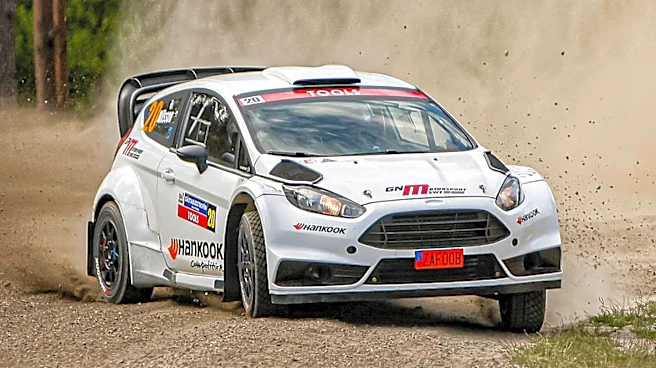

Rallying, as a motorsport discipline, boasts a rich history that stretches back to the very origins of competitive motoring. The foundational elements of what we recognize today as rallying—speed tests,
navigation challenges, and endurance—were all present in the pioneering road races of the late 19th and early 20th centuries. These early events, often spanning vast distances and encountering myriad obstacles, laid the groundwork for the sophisticated and demanding sport that rallying has become, shaping its character and defining its core challenges.
The Genesis of Competitive Motoring: Paris-Rouen and Beyond
The world's first known motor race, the 1894 Paris–Rouen Horseless Carriage Competition, stands as a pivotal moment in the birth of rallying. Sponsored by the Parisian newspaper *Le Petit Journal*, this event captured significant public attention and drew entries from prominent manufacturers of the era. While the Comte de Dion finished first, his steam-powered vehicle was deemed ineligible for the official competition, leading to Albert Lemaître, driving a 3 hp Peugeot, being declared the official winner. This initial race sparked a wave of city-to-city road races across Europe and the United States, which began to introduce many of the features that would later become hallmarks of rallying.
These early competitions established practices such as individual start times, where cars raced against the clock rather than head-to-head. They also incorporated time controls at the entry and exit points of towns along the route, requiring drivers to maintain specific schedules. The use of road books and route notes became essential for navigation, guiding participants over long distances on ordinary roads, many of which were unpaved gravel. Drivers faced a host of hazards, including dust, other traffic, pedestrians, and even farm animals, adding to the challenge and unpredictability of these nascent events.
Pioneering Endurance and Stage Formats
Just a year after the Paris-Rouen race, the Automobile Club de France sponsored an even more ambitious event from September 24 to October 3, 1895. This race, covering 1,710 kilometers (1,060 miles) from Bordeaux to Agen and back, was notable for being held in ten distinct stages. This multi-stage format is a direct precursor to the special stages seen in modern rallying, making it arguably the first stage rally in history. The top three positions were secured by a Panhard, another Panhard, and a three-wheeler De Dion-Bouton, showcasing the diverse early automotive technology.
However, the rapid increase in vehicle speeds soon brought about significant safety concerns. The May 1903 Paris–Madrid race exemplified this, with Fernand Gabriel's Mors completing 550 kilometers (340 miles) to Bordeaux in just under five and a quarter hours, averaging 105 km/h (65.3 mph). Such speeds on dusty, spectator-lined highways, open to other traffic, people, and animals, proved disastrous. The race was marred by numerous crashes, many injuries, and eight fatalities, prompting the French government to halt the event and ban this style of road racing. This ban effectively shifted European racing (outside of Italy) towards closed circuits, initially long loops of public highway, and later, purpose-built tracks like England's Brooklands, which opened in 1907.
British Trials and German Trophies: Refining the Rally Concept
While continental Europe moved towards circuits, Britain, constrained by a legal maximum speed of 12 mph (19 km/h), developed its own form of road competition: reliability trials. In April and May 1900, the Automobile Club of Great Britain and Ireland organized the Thousand Mile Trial, a 15-day event designed to promote the new form of transport by linking Britain's major cities. Seventy vehicles, mostly trade entries, participated, completing thirteen stages ranging from 43 to 123 miles (69 to 198 km) at average speeds up to the legal limit. The event also included six hillclimb or speed tests, and cars were exhibited to the public on rest days and at lunch halts.
This successful trial was followed by others, including a five-day trial based in Glasgow in 1901, and annual Glasgow–London non-stop trials organized by the Scottish Automobile Club from 1902 to 1904, which evolved into the Scottish Reliability Trial from 1905. The Motor Cycling Club also allowed cars in its trials from 1904, including famous routes like London–Edinburgh and London–Land's End. Germany also contributed to the evolution with events like the Herkomer Trophy, first held in 1905, which featured a 1,000 km (620 mi) road section, a hillclimb, and a speed trial. Prince Henry of Austria, a participant, later helped create the Prinz Heinrich Fahrt (Prince Henry Trial) in 1908, which attracted top drivers and works cars, leading several manufacturers to add "Prince Henry" models to their ranges. These early trials, with their emphasis on reliability, navigation, and varied terrain, were crucial in shaping the competitive elements that define modern rallying.
Global Challenges and the Glidden Tour
Beyond Europe, two ultra-long-distance challenges captured the public imagination: the 1907 Peking-Paris and the 1908 New York–Paris races. The Peking-Paris, though not officially a competition but a "raid" (a French term for an expedition), was "won" by Prince Scipione Borghese, Luigi Barzini, and Ettore Guizzardi in an Itala. The subsequent New York–Paris race, which traversed Japan and Siberia, was won by George Schuster and others in a Thomas Flyer. These events, while attracting only a handful of adventurous participants, highlighted characteristics that modern rally drivers still embody: meticulous preparation, mechanical skill, resourcefulness, perseverance, and a certain single-minded ruthlessness.
In the United States, the Glidden Tour, run by the American Automobile Association between 1902 and 1913, offered a gentler, yet equally influential, form of competition. This tour featured timed legs between control points and a marking system to determine winners, making it more akin to modern rallying's precision and timing aspects. These diverse early events, from the speed-focused city-to-city races to the endurance trials and navigation challenges, collectively forged the multifaceted discipline that rallying is today, demonstrating its deep roots in the pioneering spirit of early motoring.