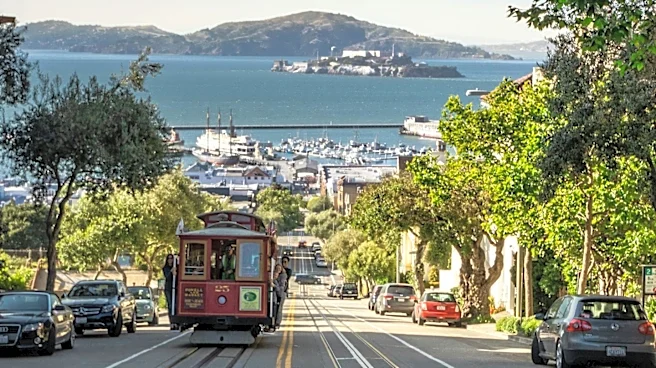





The San Francisco cable car system is a hallmark of the city, known for its unique operation and historical significance. It all began in the late 19th century, when the need for a reliable and efficient mode of transportation in the hilly city of San Francisco became apparent. This article delves into the origins and early development of this iconic system, highlighting the key figures and innovations that made it possible.
The Birth of an Idea
In 1869, Andrew Smith Hallidie,
a Scottish immigrant, witnessed a tragic accident involving a horse-drawn streetcar sliding backward on wet cobblestones, which led to the death of the horses. This incident inspired Hallidie to develop a safer and more efficient mode of transportation for the steep streets of San Francisco. By 1871, Hallidie had gathered financial support from investors like Henry L. Davis, Joseph Britton, and James Moffit to bring his vision to life.
The first successful cable-operated street railway, known as the Clay Street Hill Railroad, was inaugurated on August 2, 1873. Hallidie, along with engineer William Eppelsheimer, designed a system that used grip cars to engage with a continuously moving cable, allowing the cars to traverse the city's steep hills. This innovative design quickly became the template for other cable car systems around the world.
Early Success and Expansion
The Clay Street Hill Railroad began regular service on September 1, 1873, and was an immediate financial success. Within a year, it was transporting 3,000 passengers daily. The system's success was due in part to its ability to navigate the steep inclines of San Francisco, which were impassable for traditional horse-drawn streetcars. Hallidie's patents on the cable car technology were enforced on other promoters, further solidifying his financial success.
The early success of the Clay Street Hill Railroad led to the establishment of additional cable car lines throughout San Francisco. Between 1873 and 1890, a total of 23 lines were created, each contributing to the growing network of cable cars that would become synonymous with the city.
Challenges and Innovations
Despite its early success, the cable car system faced several challenges. The original cables were powered by stationary steam engines, which required significant amounts of coal and produced heavy black smoke. In 1901, the system was converted to oil burning, reducing the smoke and allowing for a shorter smokestack.
The introduction of electric streetcars in 1892 posed another challenge, as they were more efficient and less costly to operate. However, the cable cars remained popular due to their ability to climb steep grades. By 1912, only eight cable car lines remained, all serving areas with inclines too steep for electric streetcars.
The San Francisco cable car system's early development was marked by innovation and adaptation, laying the groundwork for its enduring legacy as a symbol of the city. Today, it remains the world's last manually operated cable car system, a testament to the ingenuity and determination of its creators.