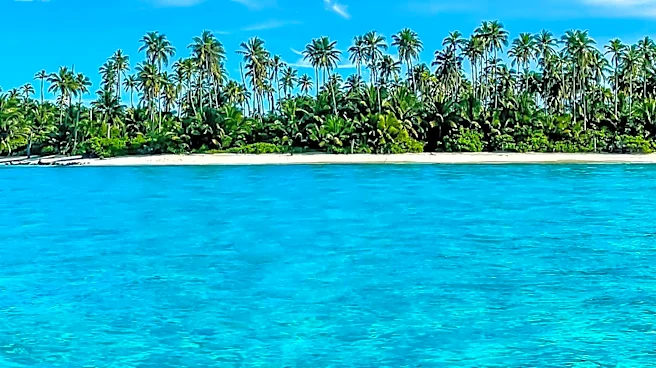






Viti Levu, the largest island in Fiji, is a central hub of activity and culture in this South Pacific nation. Home to the capital city of Suva and a large majority of Fiji's population, Viti Levu plays a crucial role in the country's geography, politics, and cultural identity. This article explores the significance of Viti Levu, highlighting its unique features and contributions to Fiji.
Geographic Features and Localities
Viti Levu is a geographically diverse island, characterized by
its mountainous terrain and varied climate. The eastern side of the island experiences heavy rainfall and is home to tropical moist forests, while the western side, known as the "burning west," is drier and supports tropical dry forests. This climatic variation has influenced agricultural practices, with sugar cane production thriving in the west and a dairy industry developing in the east.
The island is home to several important towns and cities, including Ba, Lautoka, Nadi, Nausori, Rakiraki, and Sigatoka. Suva, the capital city, serves as the political and economic center of Fiji. Viti Levu's localities are connected by a single major road that runs around the island's perimeter, facilitating transportation and trade.
Political Dynamics
Viti Levu is divided into eight of Fiji's fourteen provinces, with the western and central divisions having distinct political dynamics. The western division, comprising the provinces of Ba, Nadroga-Navosa, and Ra, has a high concentration of Indo-Fijians, many of whom are descendants of indentured workers from India. In contrast, the central division, including Naitasiri, Namosi, Rewa, Serua, and Tailevu, has a higher concentration of indigenous Fijians.
These demographic differences have influenced the political landscape of Viti Levu, with varying interests and priorities among the communities. The island's political structure reflects the broader diversity of Fiji, with efforts to balance the needs and rights of different ethnic groups.
Cultural Significance
Viti Levu is not only a political and economic hub but also a cultural center. The island's rich history and diverse population contribute to a vibrant cultural scene, with traditional Fijian customs and practices coexisting alongside modern influences. Festivals, music, and dance are integral to life on Viti Levu, celebrating the island's unique heritage.
The island's cultural significance is further enhanced by its role as a gateway to Fiji's other islands, serving as a starting point for visitors exploring the nation's natural beauty and cultural richness. Viti Levu's blend of tradition and modernity makes it a microcosm of Fiji, embodying the nation's spirit and identity.