



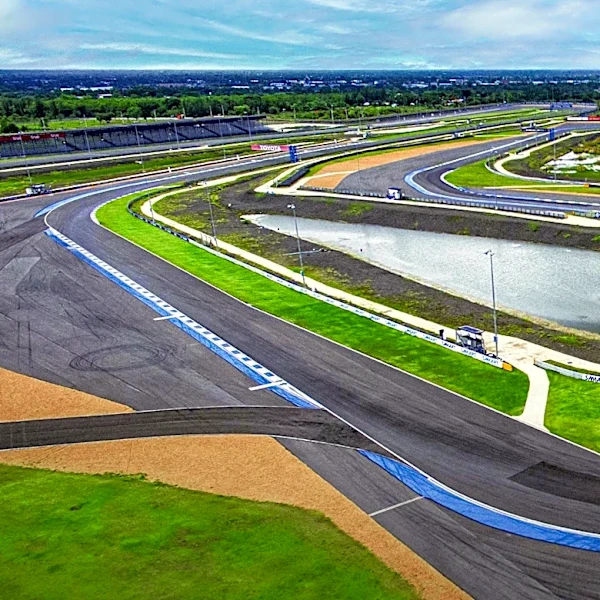



Atlanta Motor Speedway has long been synonymous with speed, holding a unique and prominent position in the history of NASCAR. From its inception as a 1.5-mile oval in 1960 to its current 1.54-mile quad-oval configuration, the track has consistently delivered some of the fastest racing on the circuit. Its high-banked turns and strategic layout have made it a favorite among drivers and fans who crave high-velocity competition. This reputation for speed has not
only defined the track but also influenced its role within the NASCAR Cup Series calendar, especially in an era where other tracks have seen speed limitations imposed.
A Legacy of High-Speed Racing
Opened in 1960 as the Atlanta International Raceway, the track quickly established itself as a venue where speed was paramount. Its original 1.5-mile, two-turn oval design, coupled with the natural characteristics of the Georgia terrain, allowed for high average speeds. This inherent speed was further amplified by the track's 24-degree banking in the turns, a feature that has historically made it one of the quickest ovals on the NASCAR Cup Series schedule. Drivers consistently pushed their machines to the limit, creating thrilling races that captivated audiences.
The track's commitment to speed was reinforced by a major remodel in 1997. This transformation saw the main straight redesigned with two bends, converting the track into a quad-oval and slightly increasing its length to 1.54 miles. More importantly, the remodel maintained and even enhanced the track's high-speed nature. This redesign was crucial in solidifying Atlanta Motor Speedway's reputation, especially as other tracks began to implement measures that limited car speeds.
The Fastest Track on the Calendar
Atlanta Motor Speedway's status as a high-speed venue became even more pronounced with the introduction of restrictor plates at other major tracks like Daytona and Talladega. These devices, mandated to reduce speeds for safety reasons at longer superspeedways, effectively made Atlanta the track with the highest average speed on the NASCAR calendar. This distinction was not merely anecdotal; in most years of the 1990s and early 2000s, Atlanta Motor Speedway recorded the highest speeds in NASCAR races. Average lap speeds often hovered around 193 mph (approximately 311 km/h), with lap records exceeding 197 mph (approximately 317 km/h).
This unparalleled speed led to the track's memorable advertising slogan: "Real Racing. Real Fast." While tracks like Talladega Superspeedway and Daytona International Speedway are longer and theoretically capable of higher speeds (over 200 mph or 322 km/h), the implementation of air restrictors in 1988 limited their average speeds to around 190 mph (306 km/h). This regulatory difference allowed Atlanta to stand out as the premier destination for raw, unrestricted speed in NASCAR, offering a distinct challenge and spectacle for competitors and fans alike. Even when Texas Motor Speedway briefly achieved similar or slightly faster times in 2004 and 2005, the wear on its track surface eventually saw Atlanta reclaim its lead in average speeds.
Hosting Major Events and Enduring Challenges
Throughout its history, Atlanta Motor Speedway has been a consistent host for major NASCAR events. From 1960 to 2010, it typically held two NASCAR Cup Series races annually, including a spring 500-mile event and a fall race that often concluded the championship season. While the schedule shifted to a single Cup Series race from 2011, the track continued to host the NASCAR Xfinity Series and NASCAR Truck Series, further cementing its role in the racing world. The track's ability to adapt, including the installation of lighting for night races between 1998 and 2001, demonstrates its ongoing commitment to providing a top-tier racing experience. This adaptability, combined with its inherent speed, ensures Atlanta Motor Speedway remains a vital and thrilling part of the motorsport landscape.