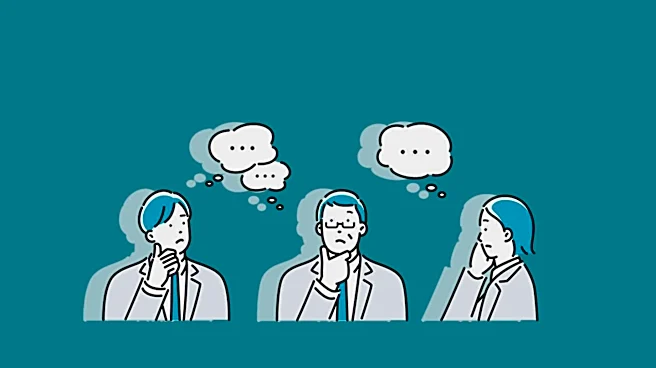








Confirmation bias, also known as myside bias, is a pervasive cognitive tendency where individuals search for, interpret, and remember information in a way that supports their existing beliefs or working hypotheses. This isn't a deliberate act of deception but rather a systematic error in inductive reasoning, often stemming from automatic mental habits. It means people are more likely to notice, accept, and recall information that aligns with what
they already think, while often overlooking or downplaying contradictory evidence. This bias is particularly strong when dealing with emotionally charged subjects or deeply held convictions, influencing everything from personal opinions to significant decisions in various fields.
The Nature of Biased Information Processing
People exhibit confirmation bias in several ways. They might selectively gather information, interpreting ambiguous evidence to fit their current stance, or recalling memories that reinforce their preconceptions. This tendency can lead to phenomena like attitude polarization, where disagreements become more extreme even when all parties are exposed to the same facts. It also contributes to belief perseverance, where beliefs persist even after the evidence supporting them has been disproven, and the irrational primacy effect, which gives greater weight to information encountered early on. Illusory correlation, the false perception of an association between two events, can also be a product of this bias.
Early psychological experiments in the 1960s first highlighted this inclination, suggesting a bias towards confirming existing beliefs. Later interpretations refined this understanding, viewing it as a tendency to test ideas in a one-sided manner, focusing on a single possibility while neglecting alternatives. This one-sided approach, while not inherently a bias, can lead to skewed conclusions when combined with other cognitive effects. Explanations for these observed biases range from wishful thinking to the inherent limitations of human information processing. Another perspective suggests that people display confirmation bias because they are weighing the potential costs of being wrong, rather than engaging in a purely neutral, scientific investigation.
Types of Confirmation Bias: Search, Interpretation, and Memory
Confirmation bias manifests in distinct ways, affecting how we seek, understand, and recall information. One primary type is the biased search for information. Individuals tend to look for evidence that would confirm their hypothesis, often phrasing questions in a way that elicits a "yes" answer supporting their theory. For instance, when trying to identify a number, someone might ask, "Is it an odd number?" rather than "Is it an even number?", even though both questions provide the same diagnostic information. This preference for "positive tests" is not always a bias in itself, as positive tests can be highly informative. However, in real-world scenarios where evidence is complex and mixed, this strategy can inadvertently reinforce existing beliefs, regardless of their truth.
Another significant aspect is the biased interpretation of information. Even when two people have access to the exact same data, their existing beliefs can lead them to interpret it differently. A classic experiment involving participants with strong views on capital punishment demonstrated this: both proponents and opponents of the death penalty, after reading identical fictional studies, found ways to interpret the evidence as supporting their original stance. They set higher standards for evidence that contradicted their views, a phenomenon known as "disconfirmation bias." This biased interpretation is not limited to emotionally charged topics and can occur even in seemingly objective tasks, such as evaluating vehicle safety based on national origin, where intelligence levels do not mitigate the effect.
Finally, confirmation bias extends to biased memory. People tend to selectively recall information that aligns with their preconceptions. This means that over time, individuals might remember details that support their beliefs more readily or vividly than those that challenge them. This selective recall further solidifies existing views, making them more resistant to change. The interplay of biased search, interpretation, and memory creates a powerful feedback loop, contributing to overconfidence in personal beliefs and allowing those beliefs to persist or even strengthen in the face of contradictory evidence. This can have serious consequences, leading to poor decisions in political, organizational, financial, and scientific contexts.
Consequences and Real-World Impact
The effects of confirmation bias are far-reaching, contributing to overconfidence in personal beliefs and enabling individuals to maintain or strengthen their convictions even when presented with evidence to the contrary. This can lead to flawed decisions in various critical areas. In political contexts, it can exacerbate polarization, as individuals selectively consume and interpret news that aligns with their partisan views, often amplified by social media's filter bubbles and algorithmic editing. This creates echo chambers where opposing viewpoints are excluded, making compromise and understanding more difficult.
Within organizations, confirmation bias can lead to poor strategic choices. Leaders or teams might seek out information that confirms their initial plans, ignoring potential risks or alternative solutions. In the financial world, investors might make suboptimal decisions by focusing only on data that supports their investment hypotheses, leading to overconfidence and potentially significant losses. Even in scientific research, which ideally strives for objectivity, confirmation bias can introduce systematic errors, particularly in inductive reasoning where supportive evidence is gradually accumulated. A police detective, for example, might prematurely identify a suspect and then only seek evidence that confirms their guilt, rather than disconfirming evidence, potentially leading to wrongful accusations. Similarly, a medical practitioner might focus on a particular diagnosis early on and then only look for confirming symptoms, missing other possibilities.