



Ranger 7 stands as a testament to the technological advancements achieved by NASA in the early 1960s. As the first successful mission in the Ranger program, it demonstrated significant improvements in spacecraft design and technology. Launched on July 28, 1964, Ranger 7 was equipped with advanced systems that enabled it to capture and transmit high-resolution images of the Moon's surface, marking a major milestone in space exploration.
Advanced Design and Equipment
The design of
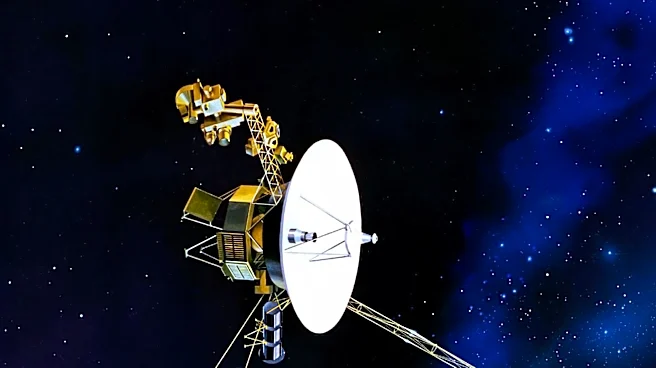
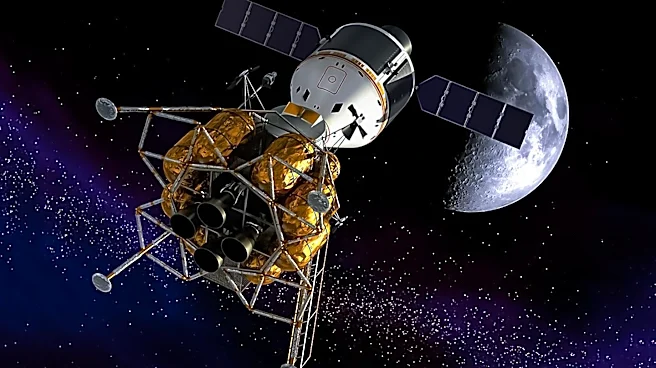
Ranger 7 was a culmination of lessons learned from previous missions. The spacecraft featured a hexagonal aluminum frame base, which housed the propulsion and power units. Topped by a truncated conical tower, it held six television vidicon cameras. These cameras were crucial for the mission's objective of capturing detailed images of the lunar surface.
The cameras were arranged in two separate channels, each with its own power supply, timers, and transmitters. This redundancy was a key feature, ensuring that even if one channel failed, the other could continue to function. The spacecraft's communications were facilitated by a quasi-omnidirectional low-gain antenna and a parabolic high-gain antenna, which transmitted the images back to Earth.
Mission Execution and Success
Ranger 7's mission was executed with precision. After its launch, the spacecraft was placed on a trajectory to impact the Moon. During its final minutes of flight, Ranger 7 transmitted over 4,300 photographs, providing scientists with unprecedented views of the lunar surface. The images revealed the Moon's cratered landscape, offering insights into its geological history.
The success of Ranger 7 was not only a technological triumph but also a validation of the improvements made in the program. The spacecraft's performance exceeded expectations, and its impact site between Mare Nubium and Oceanus Procellarum was later named Mare Cognitum, meaning "the sea that has become known."
Legacy of Technological Innovation
The technological advancements demonstrated by Ranger 7 had a lasting impact on space exploration. The mission's success paved the way for future lunar missions, providing a blueprint for spacecraft design and mission execution. The data and images captured by Ranger 7 were invaluable for planning subsequent missions, including the Apollo program.
Moreover, the success of Ranger 7 restored confidence in NASA's ability to conduct successful space missions. It highlighted the importance of technological innovation and rigorous testing in achieving mission objectives. The lessons learned from Ranger 7 continue to inform the development of modern spacecraft, underscoring the mission's enduring legacy in the field of space exploration.