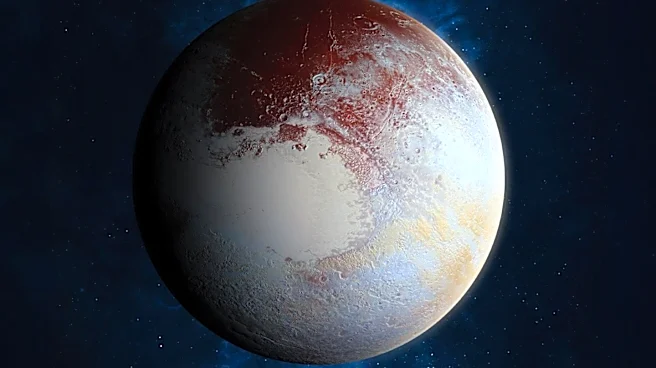





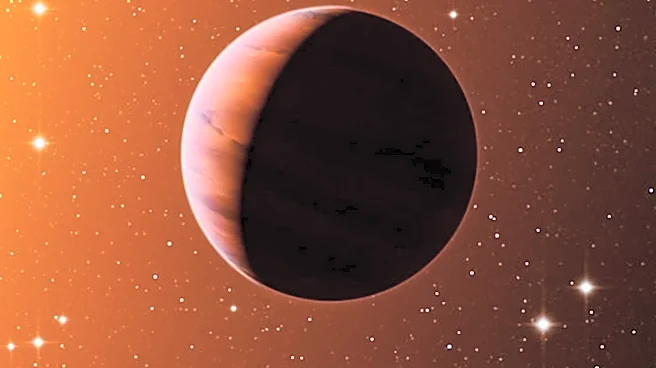


The discovery of Eris marked a significant milestone in the field of astronomy, challenging existing classifications of celestial bodies and sparking debates that led to a redefinition of what constitutes a planet. Eris, a dwarf planet, was discovered by a team of astronomers who were systematically scanning the outer reaches of the Solar System. This discovery not only added a new member to the family of known dwarf planets but also played a crucial
role in the reclassification of Pluto.
The Discovery Process
Eris was discovered by astronomers Mike Brown, Chad Trujillo, and David Rabinowitz on January 5, 2005. The team was working at the Palomar Observatory, using the Samuel Oschin telescope. Their discovery was based on images taken on October 21, 2003, which they later analyzed to identify Eris. The announcement of Eris's discovery came on July 29, 2005, coinciding with the announcement of another dwarf planet, Makemake, and shortly after the announcement of Haumea.
The discovery of Eris was part of a larger effort by the team to locate large trans-Neptunian objects (TNOs) in the outer Solar System. This systematic search had already led to the discovery of other significant TNOs, including Quaoar, Orcus, and Sedna. The identification of Eris was a testament to the team's dedication and the advanced technology available at the Palomar Observatory.
Eris and Its Characteristics
Eris is classified as a dwarf planet and is part of the scattered disc, a distant area of the Solar System populated by icy bodies. It is also considered a trans-Neptunian object, similar to Pluto. Eris has one known moon, Dysnomia, which was discovered shortly after Eris itself. The presence of Dysnomia has allowed astronomers to study Eris's mass and other characteristics in more detail.
Eris's discovery was significant because it is more massive than Pluto, which led to questions about the definition of a planet. This prompted the International Astronomical Union (IAU) to reconsider the criteria for planetary classification, ultimately leading to the reclassification of Pluto as a dwarf planet.
The Impact on Planetary Classification
The discovery of Eris and its subsequent classification as a dwarf planet had a profound impact on the field of astronomy. It challenged the traditional understanding of what constitutes a planet and led to the IAU's decision to redefine the term. According to the new definition, a planet must orbit the Sun, be spherical in shape, and have cleared its orbit of other debris.
This redefinition resulted in Pluto being reclassified as a dwarf planet, a decision that was met with both support and controversy within the scientific community and the public. The discovery of Eris thus not only expanded our knowledge of the Solar System but also reshaped the way we categorize and understand celestial bodies.