







Pesto, a beloved Italian sauce, has a rich history that dates back to ancient times. Known for its vibrant green color and aromatic flavor, pesto has evolved significantly over the centuries. From its humble beginnings in Roman cuisine to its modern-day variations, pesto remains a staple in kitchens worldwide. This article delves into the origins of pesto, its historical development, and the diverse variations that have emerged over time.
Ancient Beginnings
The roots
of pesto can be traced back to ancient Rome, where a similar paste called moretum was commonly used. This early version was made by crushing garlic, salt, cheese, herbs, olive oil, and vinegar, sometimes including pine nuts. The preparation of moretum is even mentioned in the Appendix Vergiliana, an ancient collection of poems. During the Middle Ages, a sauce known as agliata, made from garlic and walnuts, was popular in Genoa, reflecting the region's reliance on garlic, especially among seafarers.
The introduction of basil, the key ingredient in modern pesto, occurred much later, first documented in the 1850s. Emanuele Rossi and Giovanni Battista Ratto were among the first to publish recipes that included basil, marking a significant shift in the sauce's composition. Basil's popularity grew in Liguria, Italy, and Provence, France, regions where it thrived seasonally.
The Rise of Pesto alla Genovese
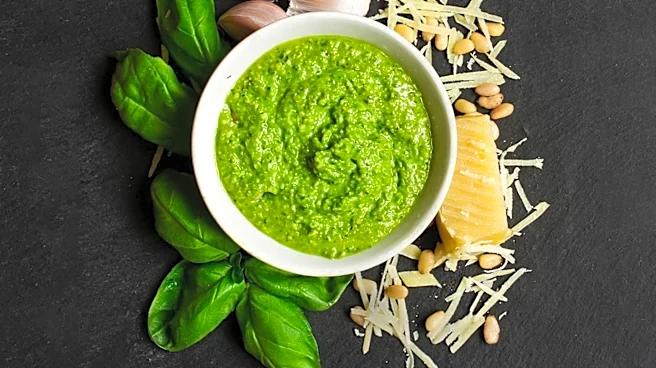
Pesto alla genovese, the classic version of pesto, originated in Genoa, Liguria. This version is traditionally made with Genovese basil, extra virgin olive oil, Parmesan or Grana Padano, pecorino sardo, pine nuts, and garlic. The name pesto comes from the Genoese verb 'pestare,' meaning 'to pound' or 'to crush,' reflecting the traditional method of preparation using a marble mortar and wooden pestle.
Over time, the recipe for pesto alla genovese was refined and became a staple in Ligurian cuisine. Notable revisions occurred shortly after its initial documentation, solidifying its place in culinary tradition. The sauce's popularity spread beyond Italy, with an early American recipe published in 1928, which included butter and cream.
Modern Variations
Today, pesto has transcended its traditional roots, with numerous variations emerging worldwide. Pesto alla calabrese, for example, is a spicy version from Calabria, made with grilled bell peppers and black pepper. Outside Italy, the term 'pesto' is used for various cold sauces or dips, often without the original ingredients. These include versions made with coriander, dill, kale, mint, parsley, and other greens.
Vegan adaptations have also gained popularity, substituting miso paste and nutritional yeast for cheese. In northern countries, ramson leaves are sometimes used instead of basil. These modern interpretations showcase pesto's versatility and its ability to adapt to different culinary traditions.