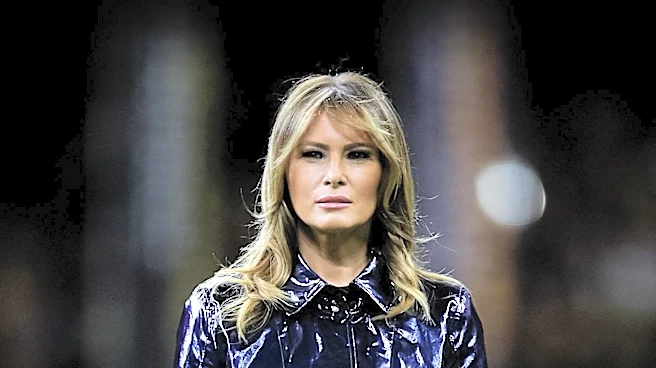



Melania Trump's October 2018 tour of Africa, encompassing Ghana, Malawi, Kenya, and Egypt, was intended to be a platform for promoting U.S. relief work and engaging with children. However, the trip quickly became entangled in a web of political tensions, both external and internal, and personal controversies. The First Lady's public statements and the behind-the-scenes dynamics within the White House staff added layers of complexity to what was ostensibly
a humanitarian mission, revealing the intricate pressures faced by a First Lady on a global stage.
The Shadow of Funding Cuts and Public Scrutiny
One significant political undercurrent during the tour was the implicit contradiction between Melania Trump's mission and her husband's policies. While she actively promoted the relief work of the United States Agency for International Development (USAID) and spent considerable time in schools, orphanages, and hospitals, questions were raised about her husband's stated intention to cut funding for this very agency. This created a challenging backdrop for her efforts, as her advocacy for aid was juxtaposed against potential reductions in that aid.
Furthermore, the tour faced intense public scrutiny, particularly concerning her fashion choices. A photograph taken in front of the Great Sphinx of Giza was deemed exploitative by some, while her decision to wear a pith helmet in Kenya drew sharp criticism for its historical association with colonialism in Africa. These sartorial decisions, whether intentional or not, diverted attention from the tour's humanitarian goals and sparked broader discussions about cultural sensitivity and historical awareness in diplomatic engagements.
Melania Trump's Defense and "Most Bullied Person" Claim
In the face of mounting criticism, Melania Trump chose to address her detractors directly. She responded by emphasizing the importance of her actions and the substance of her work over the superficiality of her outfits. This defense aimed to redirect the narrative back to her humanitarian efforts and away from the controversies surrounding her attire. However, her subsequent statement that she was "the most bullied person in the world" further intensified public debate.
This particular remark, made in the context of defending her choices during the Africa tour, was met with mixed reactions. For some, it highlighted the immense pressure and public scrutiny she experienced as First Lady. For others, it was seen as an attempt to deflect from legitimate criticisms and potentially undermined the seriousness of the issues she was addressing on her tour. The statement became a significant talking point, shaping the public's perception of both the First Lady and the tour itself.
Internal White House Conflicts and Unprecedented Actions
The Africa tour also brought to light internal conflicts within the Trump administration, specifically between Melania Trump's team and Mira Ricardel, the deputy national security advisor. A dispute arose when a staffer from Ricardel's team was removed from the First Lady's plane to make space for a journalist. This incident reportedly led to Ricardel becoming uncooperative in providing necessary logistical information for the tour, creating operational challenges.
Upon her return, Ricardel reportedly gave a highly negative report on Melania's staff, accusing them of inappropriate behavior. In an unprecedented move for a First Lady, Melania Trump twice complained to the president about Ricardel, and when no immediate action was taken, her office issued an official public statement calling for Ricardel's removal. This public demand, made without prior notification to the president or other administration officials, resulted in Ricardel's firing the following day. This episode underscored Melania Trump's willingness to assert her influence and protect her staff, even if it meant breaking traditional protocols. Furthermore, a later disagreement between Melania and Ivanka Trump arose when Ivanka undertook her own trip to Africa, which Melania perceived as an intrusion on her role, given the similarity to her own recent tour.