
"The Google Book," an illustrated children's verse book by Vincent Cartwright Vickers, has a publishing history spanning over a century, marked by various editions that reveal its evolution. From its initial
limited release in 1913 to an expanded version in 2019, the book has seen changes in its content, illustrations, and even its foreword, reflecting different editorial choices and research efforts over time. This journey highlights how a work of children's literature can be reinterpreted and presented to new generations.
The Original Vision: 1913 Limited Edition
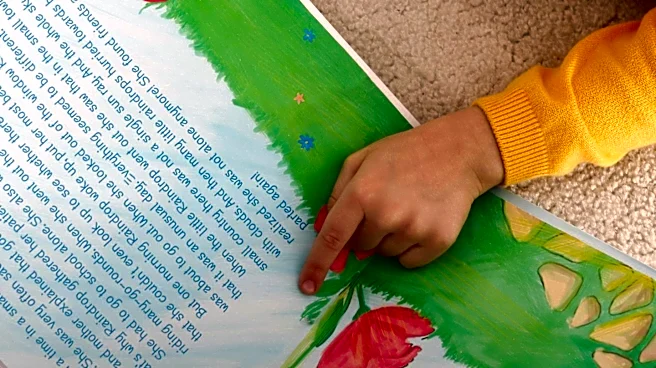
The story of "The Google Book" began in 1913 with a limited edition published by J. & E. Bumpus, Limited, in London. Vincent Cartwright Vickers, the author, funded this initial run himself, producing only 100 copies. This original version featured surrealist illustrations of various imaginary birds, such as the Poggle and the Swank, each accompanied by short poems. The central character, "The Google" itself, was depicted as a strange creature residing in a pool within a beautiful garden, which would then prowl the land where these birds lived at night. This early edition established the whimsical and imaginative tone that would define the book.
Early Revisions: The 1931 and 1979 Editions
Following its limited debut, "The Google Book" saw a trade edition released by the Medici Society in London in 1931. This version, however, was a selection of the original poems and images, resulting in the loss of eight spreads from the initial publication. Decades later, in 1979, Oxford University Press published another edition. This iteration further slimmed down the book, removing an additional three images. These early trade editions suggest a process of curation, where content was selected and omitted, potentially to fit different publishing formats or target audiences, leading to a less comprehensive presentation of Vickers' original work.
The 2019 Expanded Edition and Renewed Interest
The most recent significant publication of "The Google Book" occurred in 2019, when Ecen Books released an expanded version. This edition aimed to be more comprehensive than any of its predecessors, incorporating more illustrations. Research for this expanded version was conducted by Andrew Brain and Gareth Monger, who unearthed additional images and verses that had not been included in previous editions. The foreword for this 2019 release was penned by James Campbell, Vincent C. Vickers' grandson, who passed away two months after writing it. The coincidence of the book's title sharing a name with the well-known internet corporation, Google, has also generated comment, adding a layer of modern intrigue to this historical children's book.
Authorial Background and Enduring Appeal
Vincent Cartwright Vickers, the creator of "The Google Book," was a multifaceted individual. Born on January 16, 1879, and passing away on November 3, 1939, he was an English economist, a Deputy Lieutenant of the City of London, and a director of Vickers Limited and London Assurance. He served as a Governor of the Bank of England between 1910 and 1919, during which time he wrote and illustrated "The Google Book." Later, he became President of the Economic Reform Club and Institute. Vickers was also known as a humorist and artist, talents clearly evident in his children's book. The enduring appeal of "The Google Book" lies in its unique blend of surreal imagery and verse, which has captivated readers across its various editions and continues to spark interest due to its unusual title.