
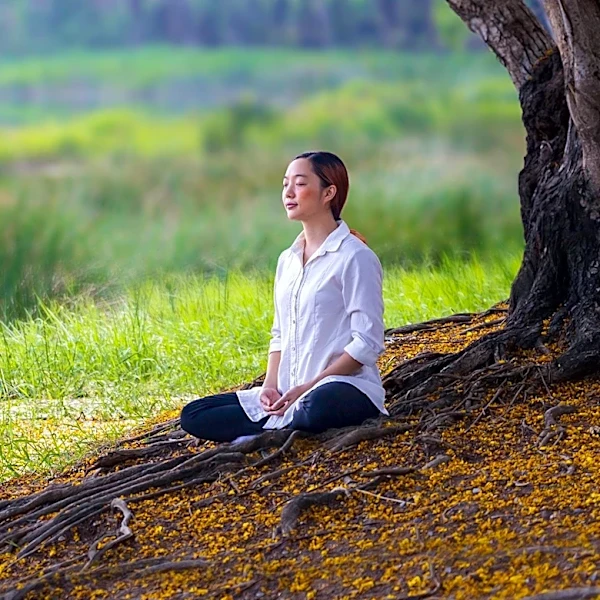


Taoist meditation is not merely a mental exercise; it is a holistic practice that deeply integrates the physiological and spiritual aspects of human existence. Central to this integration are the concepts of *qi* (vital energy), *jing* (vital essence), and *shen* (spirit or spiritual consciousness). These three treasures are seen as fundamental life forces that practitioners cultivate and refine to achieve health, vitality, and a profound connection
with the Dao. The ancient text *Neiye*, or "Inward Training," provides a foundational understanding of how these elements interrelate and are harnessed through meditative practices.
Understanding Qi: The Universal Vital Energy
*Qi*, often translated as "vital energy" or "vital breath," is considered the universal force that gives life to all things. In the context of Taoist meditation, *qi* integrates the physical with the psychological, forming a seamless web that connects all aspects of a human being. The *Neiye* describes *qi* as a powerful and salubrious reality, present everywhere and within all things. Human beings are understood as systems composed of various manifestations of *qi*.
This vital energy is not static; it is dynamic and can be guided and revolved through specific meditative techniques. Early breath-control meditations, as described in the *Neiye*, involve "coiling and uncoiling" or "contracting and expanding" the breath, which directly influences the circulation of *qi*. The goal is to ensure that *qi* flows harmoniously, as its proper guidance is essential for generating *jing* and maintaining overall well-being. The *Neiye* emphasizes that a tranquil mind and regular vital breath are crucial for halting and retaining the Way, which is infused into the body by *qi*.
Jing: The Essence of Vitality
*Jing*, or "vital essence," is a core concept in the *Neiye*, representing a concentrated and subtle form of *qi*. Its meanings range from the universal life-giving essence found in all creatures to the specific physiological substrate that allows sages to attain deep tranquility. Within each person, *qi* energy is centered in *jing*, which is considered the source of vital energy, health, vitality, and psychological well-being. The *Neiye* explicitly states, "The vital essence [*jing*]: it is the essence [*jing*] of the vital energy [*qi*]."
The original meaning of *jing*, written with the "rice radical," referred to the finest and purest rice, a religious concept associated with the "stuff of spirits" or the potency of spirits. Over time, it evolved to mean "germinal essence" or "energy that nourishes the human body." The *Neiye* highlights that by storing *jing* within the *xin* ("heart; mind"), one can become sagely. This cultivation is not merely spiritual but initiates physiological changes, transforming and renewing the human body. The text also notes that the *xin* is the "lodging place for the vital essence," underscoring the intimate connection between mental state and physical vitality.
Shen: Spiritual Consciousness and Numinous Awareness
*Shen*, typically translated as "spirit" or "spiritual," refers in Taoist meditation to a layer of mystical awareness residing within the human body. It encompasses perception, cognition, and higher forms of awareness. While its original meaning was associated with "god" or "spirit," the *Neiye* uses *shen* to denote a numinous quality, a profound inner awareness that is elusive yet essential. Verse 13 of the *Neiye* describes *shen* as a "numinous [mind] naturally residing within," which, if lost, leads to disorder, but if attained, brings order.
Cultivating *shen* involves diligently cleaning out its "lodging place" (the mind) and stilling attempts to imagine or control it. Through reverence and diligence, its vital essence naturally stabilizes. When the mind is properly aligned, *shen* allows for a nondual awareness of the Way, described as "an awareness that precedes words." This suggests a transcendent level of mind beyond empirical thought. The *Neiye*'s privately practiced meditation, where *shen* settles into the practitioner's body, is seen as a direct descendant of shamanic trance practices, emphasizing the deep spiritual connection sought.
The Interplay and Cultivation of the Three Treasures
The *Neiye* presents a physiological theory where *jing* and *qi* are united with *shen*, naturalizing the older religious connotations of *jing* and *shen* into new physical meanings. This theory posits that vital breath/energy is the source of both physical and spiritual components. The text opens by stating that *jing* is the source of life, then identifies the mind as its lodging place, defines *jing* as the essence of *qi*, and links *jing* with the indwelling *shen*. *De* ("inner power; virtue") serves as the mechanism by which *qi*, *jing*, and *shen* are drawn to the body, where they must be stored and concentrated to create a wellspring of vitality.
This cultivation process transforms an individual into a sage through heart-mind training that nurtures these three treasures within the body. The *Neiye* suggests that these elusive life forces will only remain within a person who has transformed themselves into an efficient receptacle. By cultivating the mind and making thoughts tranquil, the Way can be attained. Similarly, by diligently cleaning out the spirit's lodging place, its vital essence will naturally arrive. This intricate interplay of *qi*, *jing*, and *shen* forms the bedrock of Taoist meditation, guiding practitioners toward a profound state of integrated well-being and spiritual realization.