




Kirk Gibson carved out a remarkable career in Major League Baseball, distinguishing himself not only as a formidable player but also as a respected manager. His journey in professional baseball spanned decades, showcasing his versatility and deep understanding of the game. From his debut in 1979 as an outfielder to his final playing season in 1995, Gibson left an indelible mark on the field. Following his playing days, he transitioned into coaching
and management, demonstrating a continued commitment to the sport. This dual role allowed him to experience baseball from different perspectives, contributing to its fabric in multiple capacities.
As a player, Gibson was known for his powerful hitting and speed. He played 17 seasons in MLB, representing several teams including the Detroit Tigers, Los Angeles Dodgers, Kansas City Royals, and Pittsburgh Pirates. Over his playing career, he participated in 1,635 games, achieving a batting average of .268, hitting 255 home runs, and driving in 870 runs batted in (RBIs). These statistics underscore his consistent offensive contributions throughout his time as a player. His ability to combine power and speed made him a dynamic force on the field, capable of changing the game with a single swing or a stolen base.
Player Accolades and Memorable Moments
Gibson's playing career was punctuated by several significant achievements and memorable moments. He was a two-time World Series champion, winning with the Detroit Tigers in 1984 and the Los Angeles Dodgers in 1988. In 1988, he was named the National League Most Valuable Player (MVP), a testament to his exceptional performance that season. He also earned the American League Championship Series (ALCS) MVP award in 1984 and a Silver Slugger Award in 1988 for his offensive prowess as an outfielder. His clutch hitting was particularly renowned, exemplified by his "Miracle Homer" in Game 1 of the 1988 World Series, a dramatic two-run home run that secured a victory for the Dodgers while he was playing injured.
This iconic home run, hit against Hall of Fame closer Dennis Eckersley with a full count, showcased his determination and ability to perform under immense pressure. Despite injuries to his knee and ankle, Gibson stepped up as a pinch hitter and delivered a game-winning hit, a moment that remains one of baseball's most legendary. He also led the National League in stolen base percentage in 1990, with a remarkable 92.86%, further highlighting his all-around athletic capabilities.
Transition to Management and Coaching
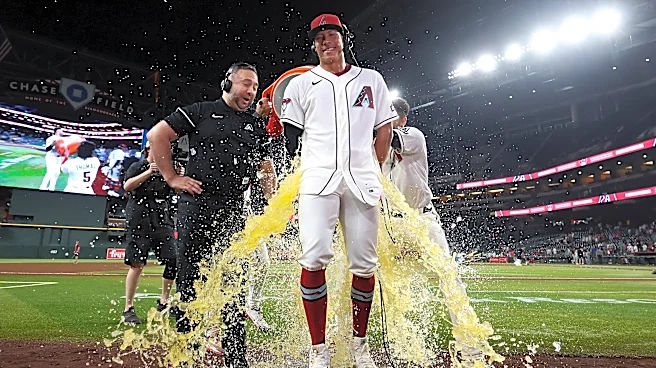
After retiring as a player, Gibson continued his involvement in baseball by moving into coaching and management. He served as a broadcaster for the Tigers from 1998 to 2002 and then as an assistant manager for the Tigers from 2003 to 2005. In 2007, he joined the Arizona Diamondbacks' coaching staff as an assistant manager. His experience as a player, particularly his understanding of game situations and player psychology, proved valuable in these new roles.
His managerial career officially began mid-season in 2010 when he took over as the head coach for the Arizona Diamondbacks. He signed a two-year contract after that season and achieved significant recognition in 2011, being named the National League Manager of the Year. During his tenure with the Diamondbacks from 2010 to 2014, he managed 728 games, accumulating 353 wins and 375 losses, for a .485 winning percentage. Although he was dismissed before the end of the 2014 season, his time as manager demonstrated his leadership qualities and strategic acumen, further solidifying his multifaceted contributions to Major League Baseball.