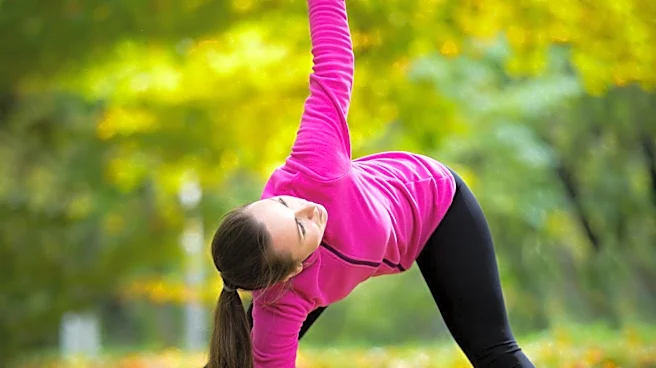

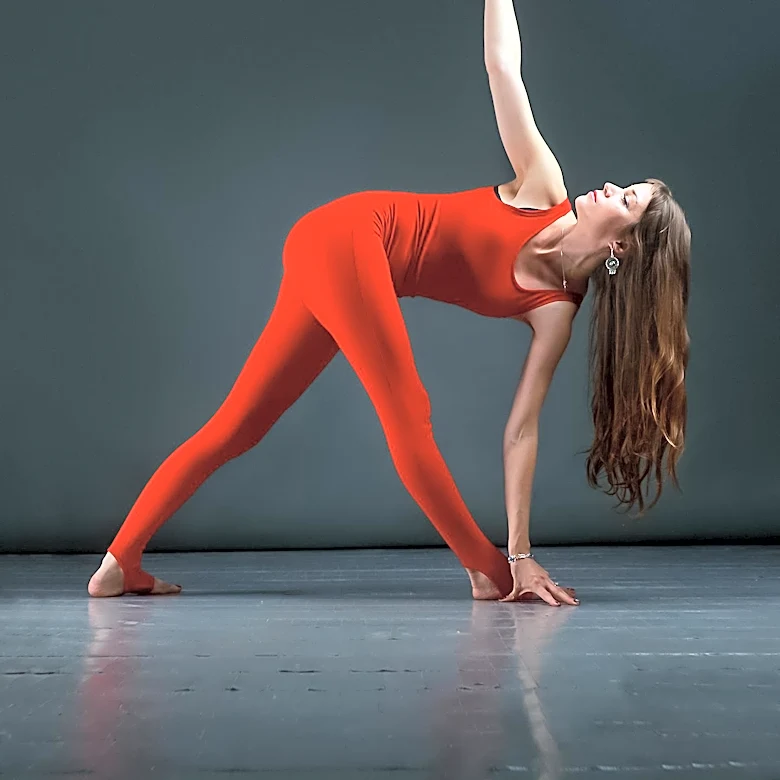





Parivrtta Trikonasana, known as the revolved triangle pose, is a popular yoga asana that offers a unique twist on the traditional triangle pose. This pose is a variation of the Utthita Trikonasana, or extended triangle pose, and involves a full rotation of the torso. Practicing Parivrtta Trikonasana can help strengthen the core and improve flexibility, making it a valuable addition to any yoga routine.
Origins and Meaning
The name Parivrtta Trikonasana is derived from
Sanskrit, where "parivrtta" means to turn around or revolve, "tri" means three, "kona" means angle, and "asana" means posture or seat. This asana is a modern yoga exercise that has its roots in the teachings of Tirumalai Krishnamacharya, a prominent yoga teacher of the 20th century. His work, including the 1934 book Yoga Makaranda, helped popularize many yoga poses, including the triangle pose and its variations.
The revolved triangle pose is a standing asana that requires balance and flexibility. It is often used as a follow-up to the extended triangle pose, allowing practitioners to deepen their practice by incorporating a twist that engages the core and enhances spinal flexibility.
Practicing Parivrtta Trikonasana
To perform Parivrtta Trikonasana, one begins in a standing position with feet placed one leg-length apart. The right foot is turned completely to the outside, while the left foot is turned slightly inward. The arms are extended parallel to the ground, and the trunk is rotated to the right. The right hand reaches down towards the left foot, while the left arm extends upwards, creating a vertical line with the shoulders.
This pose requires a strong rotation of the torso, which can be challenging for beginners. It is important to maintain alignment and avoid straining the neck or back. Practitioners are encouraged to use props, such as blocks, to support the lower hand if reaching the floor is difficult.
Benefits and Considerations
Parivrtta Trikonasana offers several benefits, including improved balance, increased flexibility, and strengthened core muscles. The twisting motion helps to detoxify the body by stimulating the digestive organs and improving circulation. Additionally, this pose can help alleviate back pain and improve posture.
However, it is important to approach this pose with caution, especially for those with existing back or neck issues. Practitioners should focus on maintaining proper alignment and listening to their bodies to avoid injury. As with any yoga practice, it is advisable to learn this pose under the guidance of a qualified instructor.
Incorporating Parivrtta Trikonasana into a regular yoga practice can enhance overall physical and mental well-being, making it a valuable pose for yogis of all levels.