





Helena, Montana, experienced a remarkable transformation during the late 19th century, driven by the vast quantities of gold extracted from Last Chance Gulch. This period, often referred to as its golden age, saw the city become one of the wealthiest in the United States, attracting a diverse population and fostering a unique social and architectural landscape. The influx of riches not only funded grand building projects but also shaped the city's
social fabric, including the development of a prominent entertainment district. This era of prosperity, however, also brought challenges, such as devastating fires, which prompted the community to develop innovative solutions for protection.
Unprecedented Wealth from Last Chance Gulch
The discovery of gold in Last Chance Gulch on July 14, 1864, by the Four Georgians marked the beginning of Helena's rapid ascent. Over two decades, the placers of Last Chance Gulch yielded approximately $3.6 billion (in current dollars) worth of gold, making them among the most renowned in the American West. Much of this gold-bearing ground now lies beneath Helena's streets and buildings; a gold vein was even discovered under a bank's foundations during repairs in 1970. This immense production, with the largest output occurring before 1868, led to an extraordinary concentration of wealth in the city.By 1888, Helena was home to nearly 50 millionaires, a number reportedly higher than in any other city worldwide at the time. This sudden enrichment provided the capital for significant urban development. The city's economic boom attracted not only miners but also entrepreneurs, merchants, and professionals, all seeking to capitalize on the burgeoning prosperity. This period established Helena as a significant economic hub in the Montana Territory, laying the groundwork for its future as the state capital.
Architectural Splendor and Urban Development
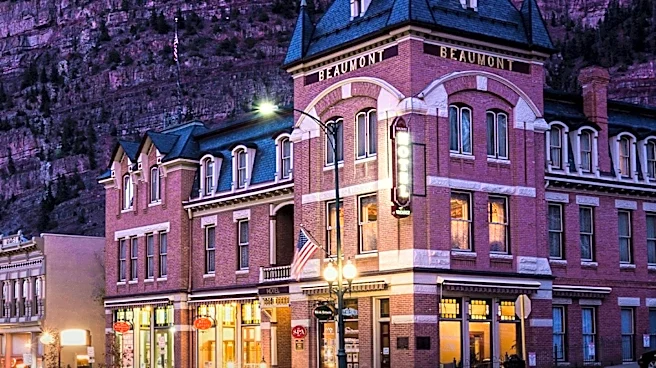
The vast wealth generated by gold mining directly influenced Helena's architectural character. The city became known for its ambitious building projects and grand residential areas, particularly its Victorian district, which stands as a testament to this opulent era. The architectural styles reflected the aspirations and tastes of the newly affluent citizens, resulting in a distinctive urban aesthetic that combined frontier pragmatism with sophisticated design.Despite the grandeur of its buildings, Helena's urban planning retained some of its gold rush origins. The first topographical survey was conducted in 1865 by Captain John Wood, but many streets followed the chaotic paths initially traced by miners based on their claims. This resulted in an irregular street grid where few blocks were consistent in size or shape. This unique blend of planned development and organic growth gives Helena's historic core a distinctive charm, showcasing the rapid, often unplanned, expansion driven by the gold rush.
Social Dynamics and the "Red Light District"
The influx of miners and wealth also fostered a thriving social scene, including a prosperous "red light district." This district became an important part of the local economy and social life for many decades. One of the most notable figures in this aspect of Helena's history was Josephine Hensley, known as "Chicago Joe" Airey. She built a highly successful business between 1874 and 1893, becoming one of Helena's largest and most influential property owners. The city's brothels continued to operate as a significant local business well into the 20th century, finally closing in 1973 after the death of "Big Dorothy" Baker, Helena's last madam.This aspect of Helena's history highlights the complex social dynamics of a boomtown, where rapid wealth creation often went hand-in-hand with the development of entertainment and vice industries. These establishments played a role in the daily lives of many residents and contributed to the city's unique character during its most prosperous years.
Battling the Flames: The Guardian of the Gulch
The rapid construction and often makeshift nature of early buildings in Helena made the city vulnerable to fires. A series of devastating fires struck Helena in April 1869, November 1869, October 1871, August 1872, and January 1874, with the last one extending into the mining camp itself. In response to these repeated disasters, the community took action. In 1886, a wooden watchtower, known as the "Guardian of the Gulch," was constructed on Town Hill, overlooking the historic downtown. This tower replaced earlier, more fragile observation posts, the first of which was built in 1870 on the same site.The Guardian of the Gulch became an emblem of Helena's resilience and its commitment to protecting its burgeoning wealth and infrastructure. Although the tower was severely damaged by arson in 2016 and deemed unstable, plans were made to rebuild it using the original construction methods. This landmark stands as a symbol of the community's efforts to safeguard its prosperity against the ever-present threat of fire.