






Isokinetic exercise represents a distinct method for enhancing muscle strength, characterized by muscle contractions that occur at a constant speed. This approach is particularly valuable in fields like rehabilitation and sports training, where precise control over movement and resistance is crucial. Unlike other forms of exercise where tension or muscle length might vary, isokinetic training ensures that the velocity of the muscle contraction remains
consistent throughout the movement. This unique characteristic allows for a targeted and often safer way to build muscle strength and coordination, making it a key component in various physical conditioning programs.
Understanding Isokinetic Contractions
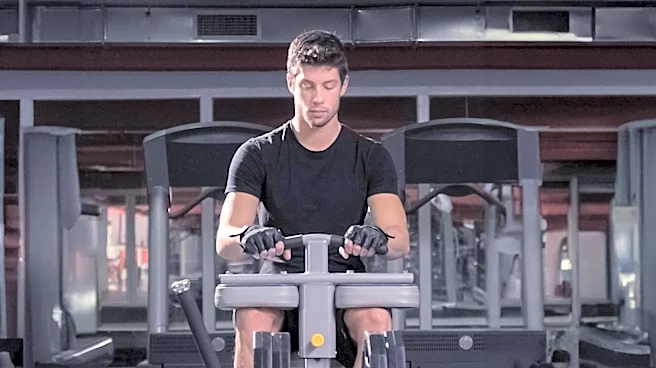
At its core, an isokinetic contraction is defined by a constant speed of muscle movement, while the tension generated by the muscle can change. This contrasts sharply with isotonic contractions, where the tension remains constant while the muscle's length and joint angle change. In an isokinetic exercise, specialized equipment, often computer-controlled machines, adjusts the resistance to match the force exerted by the individual, thereby maintaining a uniform speed of movement. This means that as the muscle's ability to produce force changes throughout its range of motion, the machine adapts to ensure the speed stays the same.
The concept of isokinetic exercise was first introduced with machines in 1966. The primary advantage of this method lies in its ability to allow for full force application throughout the entire range of motion. Every segment of the movement is strengthened uniformly, which can lead to more comprehensive muscle development. Furthermore, the consistent force application inherent in isokinetic training can help prevent muscle soreness, a common issue with other types of exercise where force might vary significantly across the movement.
Applications in Rehabilitation and Training
Isokinetic exercise is widely applied in rehabilitation settings, particularly for individuals recovering from injuries. Its controlled nature allows therapists to safely strengthen muscles without placing undue stress on healing tissues. By maintaining a constant speed, the risk of sudden, uncontrolled movements that could exacerbate an injury is minimized. This makes it an effective tool for restoring muscle function and improving joint stability after trauma or surgery.
Beyond rehabilitation, isokinetic training also finds significant use in sports training. Swimmers, for instance, can benefit from this method to enhance their muscle power and endurance. The resistance encountered in swimming, particularly the drag from water, closely mimics the principles of isokinetic exercise, where resistance changes with the force applied. The ability to strengthen muscles uniformly across their full range of motion can translate into improved performance and reduced risk of injury for athletes. The full engagement of muscle throughout the movement ensures that no part of the range is neglected, leading to balanced strength gains.
Distinguishing Isokinetic from Other Exercise Types
To fully appreciate isokinetic exercise, it's helpful to compare it with isometric and isotonic exercises. Isometric exercise involves a static contraction where the muscle length and joint angle do not change, even though the contraction strength may vary. An example is holding a plank position. Isotonic exercise, on the other hand, involves changes in muscle length and joint angle while the contraction strength ideally remains constant, such as lifting a weight through its full range of motion. However, in reality, many traditional weightlifting exercises are