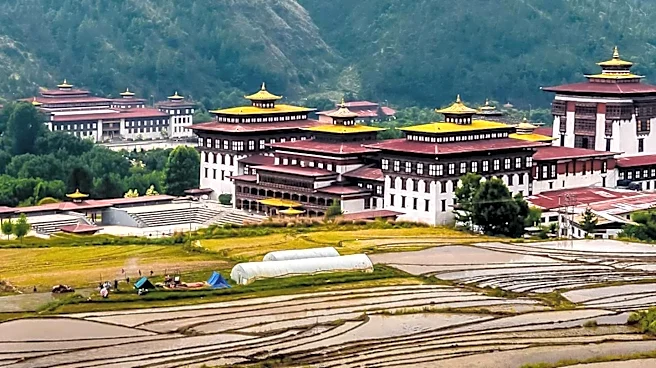


Bhutan, a small landlocked country in South Asia, has a unique economic landscape shaped by its geography and cultural priorities. The economy is primarily based on agriculture and forestry, which provide the main livelihood for more than 60% of the population. Despite its small size, Bhutan has managed to maintain a developing economy with a focus on sustainability and Gross National Happiness.
Agriculture and Forestry
Agriculture in Bhutan is largely subsistence-based, with
most of the population engaged in farming and animal husbandry. The rugged mountainous terrain poses significant challenges to infrastructure development, making it difficult to expand agricultural activities. However, these natural barriers have also helped preserve Bhutan's rich biodiversity and traditional farming practices. The agricultural sector contributes significantly to the country's GDP, although it faces limitations due to the small amount of arable land available.
Forestry is another crucial component of Bhutan's economy. The country's vast forest cover not only supports the livelihoods of many Bhutanese but also plays a vital role in maintaining ecological balance. The government has implemented policies to ensure sustainable forest management, balancing economic needs with environmental conservation. This approach aligns with Bhutan's commitment to Gross National Happiness, prioritizing the well-being of its citizens and the environment over mere economic growth.
Industrial Sector and Hydropower
Bhutan's industrial sector is relatively small, with most production occurring in cottage industries. These small-scale enterprises produce goods such as textiles, handicrafts, and food products, which are often sold in local markets or exported to neighboring countries. The industrial sector faces challenges such as limited access to capital and skilled labor, as well as stringent government regulations aimed at protecting the environment and cultural heritage.
Hydropower is a significant driver of Bhutan's economic growth, with the country exporting electricity to India. The revenue generated from hydropower exports has helped finance various development projects and improve infrastructure. However, Bhutan's reliance on hydropower also makes its economy vulnerable to fluctuations in demand from India, its primary export market.
Economic Challenges and Opportunities
Despite its progress, Bhutan's economy faces several challenges. The country's dependence on India for trade and financial assistance creates vulnerabilities, particularly during economic slowdowns in India. Additionally, foreign investment is hampered by detailed controls and uncertain policies in areas such as industrial licensing, trade, labor, and finance.
Nevertheless, Bhutan has opportunities for growth, particularly in the tourism sector. The government encourages visits by upscale, environmentally conscientious tourists, aligning with its goals of preserving cultural traditions and the environment. By carefully managing tourism and other sectors, Bhutan aims to achieve sustainable economic development while maintaining its unique cultural identity and commitment to Gross National Happiness.