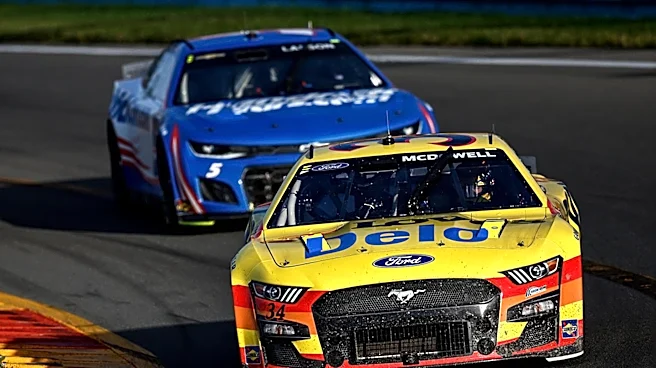


The Daytona 500, a cornerstone of the NASCAR Cup Series, has undergone significant transformations since its inception in 1959. What began as a successor to races on a combined sand and highway road course has evolved into a modern spectacle, adapting its qualifying procedures and even its broadcast times to meet the demands of a growing audience and technological advancements. This evolution reflects the race's enduring importance and its continuous
effort to remain a premier event in motorsports.
From Beach Course to Superspeedway
The roots of the Daytona 500 lie in shorter stock car races held on the Daytona Beach Road Course. This unique track was partially situated on the sand and partially on a highway near the beach. These earlier events typically covered 200 miles. The transition to the Daytona International Speedway in 1959 marked a pivotal moment, as it hosted the first 500-mile stock car race, which would eventually become known as the Daytona 500. This new superspeedway provided a dedicated, purpose-built venue for the longer, more demanding race, moving away from the unconventional road course format.
Since 1982, the Daytona 500 has consistently served as the season-opening race for the NASCAR Cup Series, a tradition that has cemented its status. From 1988 to 2019, it was also one of four restrictor plate races on the Cup schedule, a technical specification that influenced racing dynamics and strategy.
Adapting Qualifying and Race Scheduling
The qualifying procedure for the Daytona 500 is distinct. While the front row is determined by a timed session, the majority of the starting grid is set by two separate qualifying races, historically known as the Duels at Daytona. These races have seen their lengths change over the years, from 100 miles in the early days to 150 miles with potential overtime in more recent times. This system ensures that many teams must actively compete to secure a spot in the main event, adding an extra layer of competitive drama.
Another significant evolution has been the race's scheduling, particularly concerning its start and end times. The installation of a lighting system at Daytona International Speedway in 1998, coupled with new television contracts in 2001 and 2007, led to the race starting and finishing much later than in its early years. From 1979 to 2000, the race typically started at 12:15 p.m. EST. However, to accommodate west coast viewers, start times shifted, moving to 1:00 p.m. EST (2001-2004), 2:30 p.m. (2005-2006), and then 3:30 p.m. (2007-2009). This often resulted in the race ending after sunset, with every Daytona 500 between 2006 and 2010, as well as the 2012 and 2014 races, concluding under the lights. The 2007 race was notably the first Daytona 500 to extend into prime-time, ending at 7:07 p.m. Eastern time, showcasing the race's adaptability to television demands and its journey from a daytime event to one that can captivate audiences well into the evening.