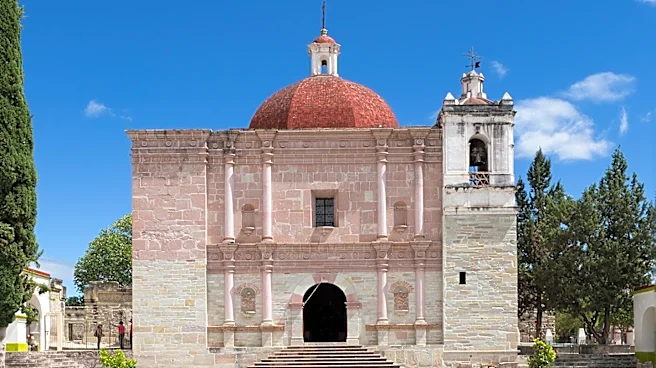









Mission Concepcion, an historic site near San Antonio, Texas, played a crucial role in the early days of the Texas Revolution. On October 28, 1835, it became the setting for the Battle of Concepcion, a pivotal engagement that historian J.R. Edmondson identifies as "the first major engagement of the Texas Revolution." This battle, fought between Mexican troops and Texian insurgents, highlighted the strategic importance of the mission's location and terrain,
influencing the outcome of the conflict and shaping Texian military perceptions. The mission's historical significance extends beyond the battle, as it is also recognized as the oldest unrestored stone church in America and a UNESCO World Heritage Site.
Mission Concepcion: A Natural Fortress
The Texian scouting party, led by James Bowie and James Fannin, recognized the inherent defensive advantages of the area around Mission Concepcion. Located approximately two miles from San Antonio de Bexar, the mission offered a strategic position along the San Antonio River. The river itself formed a horseshoe bend, with the two sides of the curve about 100 yards apart. This natural feature created a formidable defensive line. Furthermore, the river bottom, situated about six feet below the level of the surrounding prairie, was heavily shaded by trees on both sides. This dense foliage provided excellent cover for the Texian forces, allowing them to conceal themselves effectively from the approaching Mexican troops.
This terrain proved to be a significant obstacle for the Mexican cavalry, which found it difficult to maneuver effectively in the wooded, riverbottom environment. The Texians capitalized on these natural defenses, taking refuge in the gully and firing from its edge before dropping down to the river level to reload. They also strategically trimmed undergrowth near their camp to improve their own visibility while maintaining cover. The ability to dig steps into the embankment further facilitated their movement and firing positions. The choice of Mission Concepcion as a defensive stronghold was a testament to the Texian leaders' understanding of the landscape and their tactical acumen, turning the natural features of the area into a decisive advantage against a numerically superior enemy.
The Battle's Influence on Texian Strategy and Morale
The Battle of Concepcion, though brief, had a profound impact on the Texian forces. The Texian victory, achieved with minimal casualties (one killed, one wounded) against a Mexican force that suffered between 14 and 76 killed and 39 wounded, significantly boosted Texian morale and confidence. Historian Alwyn Barr attributed the Texian success to "able leadership, a strong position, and greater firepower." The Texians' long rifles proved to have a much greater range than the weapons carried by the Mexican infantry, a factor that played a crucial role in their ability to repel the Mexican attacks.
However, this seemingly easy victory also instilled a potentially dangerous overconfidence. Stephen Hardin suggests that "the relative ease of the victory at Concepcion instilled in the Texians a reliance on their long rifles and a contempt for their enemies." This newfound reliance on their superior firepower and a perceived weakness in their adversaries may have led to a strategic miscalculation in later engagements. While the battle demonstrated the effectiveness of their tactics and weaponry, it also fostered an attitude that, according to Hardin, "may have contributed to their later defeat at Coleto." The Battle of Concepcion, therefore, stands as a double-edged sword in the narrative of the Texas Revolution: a clear victory that provided crucial momentum, but also potentially sowed the seeds of future setbacks by shaping Texian perceptions of their own invincibility and their enemy's capabilities.