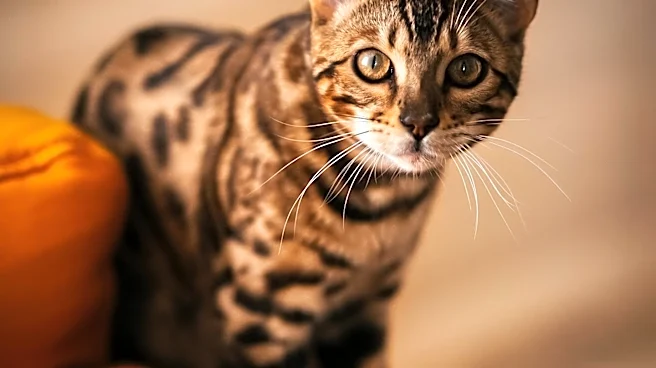




Like many pedigreed animals, Bengal cats are susceptible to certain health conditions, some of which are genetic. Responsible breeding practices and regular veterinary care are crucial for maintaining the well-being of these distinctive felines. Understanding the common health concerns associated with the Bengal breed, such as heart conditions, eye diseases, and blood disorders, can help owners and breeders provide the best possible care. Ongoing
research efforts are also working to identify genetic markers and improve screening methods for these conditions.
Hypertrophic Cardiomyopathy (HCM)
Hypertrophic cardiomyopathy, or HCM, is a significant health concern within the Bengal cat breed. This disease causes the heart muscle (myocardium) to become abnormally thick, which impedes the heart's ability to effectively pump blood. HCM is a common genetic disease in Bengal cats, and as of 2018, there is no specific genetic test available to identify it. The current standard practice for screening breeding Bengal cats in the US involves annual echocardiograms performed by a board-certified veterinary cardiologist. This regular screening helps ensure that no hypertrophic cardiomyopathy is present in cats used for breeding. As of January 2019, North Carolina State University in the US is actively working to identify genetic markers for HCM in the Bengal breed, which could lead to more advanced screening methods in the future. A study conducted in 2013 estimated the prevalence of HCM in Bengal cats to be 16.7%, with a 95% confidence interval of 13.2–46.5%.
Bengal Progressive Retinal Atrophy (PRA-b)
Bengal cats are also known to be affected by Bengal progressive retinal atrophy (PRA-b), a genetic disease that leads to a gradual loss of vision, eventually resulting in blindness. The onset of vision loss typically begins around 7 weeks of age and progressively worsens, often leading to very poor eyesight by approximately two years old. Cats affected by PRA-b may exhibit several signs, including increased difficulty seeing at night. They might also become louder or more attached to their owners as their vision deteriorates. Physically, their pupils often appear more enlarged than normal in similar light conditions, and they may hold their whiskers farther forward, possibly as a compensatory mechanism for their reduced sight.
Erythrocyte Pyruvate Kinase Deficiency (PK-deficiency)
Another common genetic disease found in Bengal cats is Erythrocyte pyruvate kinase deficiency, often referred to as PK-deficiency or PK-def. This condition is a genetic disorder that affects red blood cells. Breeders play a crucial role in managing PK-deficiency by testing their breeding cats. It is essential to ensure that two PK-deficiency carriers are not mated, as this increases the risk of producing affected offspring. The testing process for PK-deficiency is relatively straightforward: a breeder uses a cotton swab to collect a sample from the inside of the cat's mouth, which is then mailed to a laboratory for analysis. This proactive testing helps to minimize the incidence of the disease within the breed.
Ulcerative Nasal Dermatitis
A unique form of ulcerative dermatitis, specifically affecting the nasal planum (the rhinarium or nose leather) of Bengal cats, was first reported in 2004. This condition typically manifests between the ages of 4 and 12 months. It begins as a dry scale and can progress to crusts and fissures, which are characteristic of hyperkeratosis. The precise cause of this condition remains unclear, but it is considered hereditary and currently incurable. However, it has been observed to respond favorably to topical steroid treatments, such as prednisolone and tacrolimus ointment, which can help manage the symptoms.