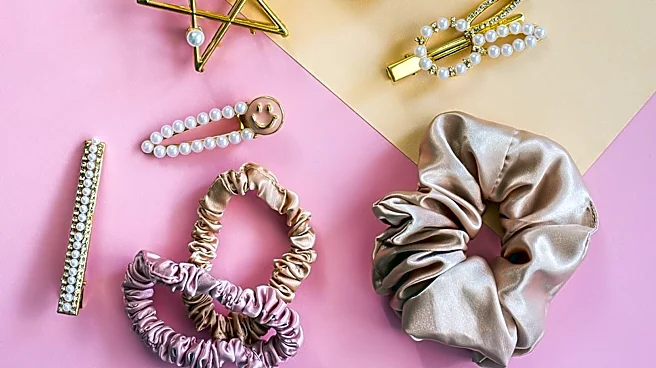




A hair clip, often known as a barrette in American English or a hair slide in British English, serves as a fundamental clasp designed to hold hair securely in place. These accessories are commonly crafted from materials like metal or plastic, and some even incorporate decorative fabric to enhance their aesthetic appeal. Beyond their primary function of securing hair, hair clips have evolved to encompass a wide range of designs and uses, from simple
everyday tools to elaborate decorative pieces, reflecting their enduring presence in personal grooming and fashion.
Basic Design and Functionality
The core purpose of a hair clip is to manage and style hair. One common type of barrette features a clasp mechanism that secures it in place, typically opening when two metal pieces on either side are pressed together. The size of a hair clip plays a significant role in its application. Smaller clips are frequently used to manage front sections of hair, keeping strands out of the eyes. In contrast, larger barrettes, which can measure between 3 to 4 inches (8 to 10 cm) in length, are specifically designed to pull back longer hair or a substantial volume of hair. These larger clips are usually worn at the back of the head, often in an upright position.
When considering a hair clip for pulling back hair, its length is not the sole factor. The width of the barrette is also an important indicator of how much hair it can effectively secure. This consideration ensures that the clip can adequately hold the desired amount of hair, whether for practical purposes or for creating a specific hairstyle. The variety in size and design allows hair clips to cater to different hair types and styling needs, making them highly adaptable accessories.
Diverse Applications in Hair Styling
Hair clips are utilized in numerous ways beyond simply keeping hair out of the face. They are essential tools for securing various hairstyles, such as buns, French twists, or ponytails. Short metal "clip" barrettes, for instance, are often employed to pull back smaller sections of hair from the front. While their functional utility is paramount, hair clips also frequently serve purely decorative purposes. Many women use them to add an element of style or adornment to their hair, transforming a practical item into a fashion statement.
This dual functionality highlights the versatility of hair clips. They can be discreetly used to maintain a neat appearance or prominently displayed as a key component of an outfit. The integration of decorative fabrics and various materials further blurs the line between utility and ornamentation, offering a broad spectrum of choices for consumers. Whether for a casual look or a formal event, there is a hair clip designed to meet both the practical and aesthetic demands of hair styling.
Innovations in the 20th Century
The 20th century saw a significant proliferation of new hair clip designs, expanding the options available to consumers. Among the more notable inventions is the elongated hair clip, which was created in 1972 by Marnie Bjornson. This particular design offered a new approach to securing hair, contributing to the evolving landscape of hair accessories. Another innovative design from this period is the simple bendy clip.
The bendy clip operates through a unique mechanism: it can be snapped from a concave to a convex position, which allows it to spring into a locked position or to open. This clever design provided a user-friendly and effective way to hold hair, showcasing the ingenuity applied to developing practical hair tools. These inventions underscore a period of significant innovation in the hair accessory industry, leading to the diverse array of hair clips we see today, each offering distinct advantages in terms of function and ease of use.