
The television series "Friday Night Lights" distinguished itself not only through its compelling narrative but also through its innovative and unconventional production methods. These techniques were deliberately
employed to foster a sense of realism and immediacy, allowing the cast and crew a degree of creative freedom rarely seen in television production. This approach, championed by developer Peter Berg, became a hallmark of the show, contributing significantly to its critical acclaim and authentic feel.
From the outset, the producers made a conscious decision to grant the cast considerable leeway in their performances. While working with a script each week, actors were empowered to influence the delivery of their lines and the blocking of each scene. If an actor felt that a particular line or action was not true to their character, or if a mode of delivery didn't feel right, they were given the freedom to change it. The only stipulation was that they still had to hit the vital plot points of the story. This trust in the actors' instincts was a foundational element of the show's creative process.
Filming Without Rehearsal: Capturing Raw Emotion
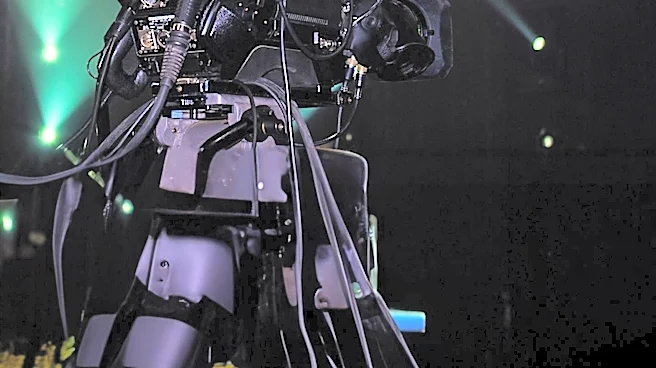
Complementing this freedom in performance was a distinctive filming strategy: shooting without extensive rehearsal and without rigid blocking. Unlike traditional television production where actors often stand in fixed positions with cameras set around them, "Friday Night Lights" trained its camera operators to follow the actors. This meant that the actors knew the cameras would adapt to their movements, rather than the other way around. This method allowed for more spontaneous and natural interactions, capturing raw emotions and reactions as they unfolded.
Executive producer Jeffrey Reiner succinctly described this approach as "no rehearsal, no blocking, just three cameras and we shoot." This philosophy permeated the entire production, creating an environment where authenticity was prioritized over rigid adherence to pre-planned staging. The result was a dynamic visual style that often felt more akin to documentary filmmaking than a scripted drama, immersing viewers more deeply into the lives of the characters in Dillon, Texas.
Impact on Cast and Crew: A Transformative Experience
Working under these unique conditions had a profound impact on everyone involved with the show. Series star Kyle Chandler, who played Coach Eric Taylor, reflected on the experience by stating, "When I look back at my life, I'm going to say, 'Wow, [executive producer] Peter Berg really changed my life.'" This sentiment underscores the transformative nature of the production environment, suggesting that the creative freedom and collaborative spirit fostered on set were deeply meaningful to the cast.
Executive producer and head writer Jason Katims echoed this feeling, noting, "When I first came on [the FNL] set, I thought, it's interesting – this is what I imagined filmmaking would be, before I saw what filmmaking was." This highlights how the production of "Friday Night Lights" diverged from typical industry practices, offering a more organic and artist-driven experience. This commitment to an authentic and flexible production style was instrumental in shaping the show's distinctive tone and its ability to resonate so deeply with audiences and critics alike, exploring complex issues like family values, school funding, and economic opportunities within its small-town setting.