







The Apollo 12 mission, launched on November 14, 1969, marked a significant step forward in lunar exploration, demonstrating NASA's growing capability for precision landings and extended surface operations. While Apollo 11 had achieved the monumental first human landing on the Moon, Apollo 12 aimed to prove that astronauts could land accurately near specific points of scientific interest. This mission, crewed by Pete Conrad, Alan Bean, and Richard
Gordon, faced immediate peril during launch but ultimately succeeded in its ambitious goals, including a pinpoint landing just 535 feet from the robotic Surveyor 3 probe and the deployment of advanced scientific instruments.
A Lightning-Struck Launch
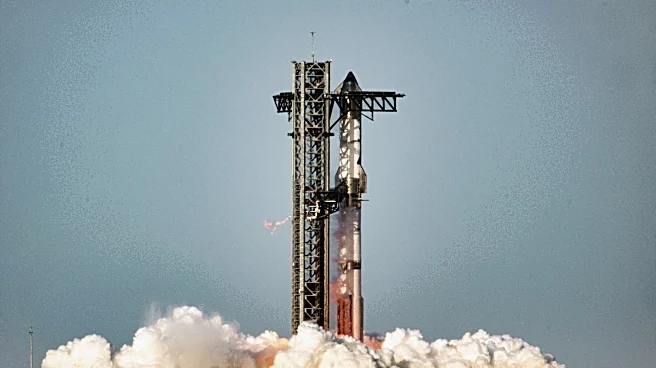
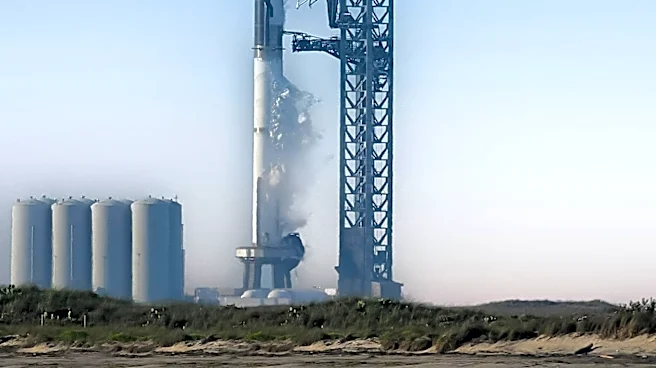
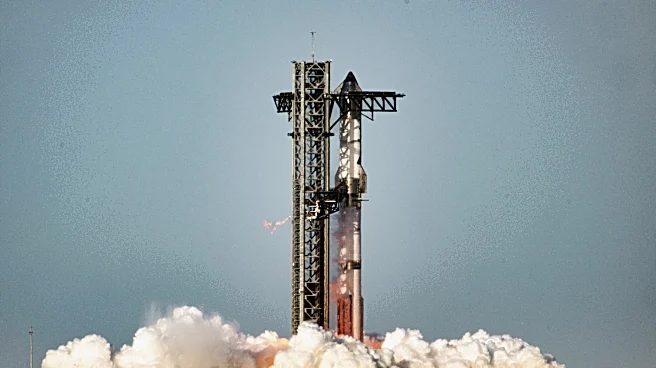
The journey of Apollo 12 began under challenging conditions. On November 14, 1969, the Saturn V rocket launched from Kennedy Space Center into overcast, rainy skies. Just 36.5 seconds after liftoff, lightning struck the vehicle, triggered by the rocket itself. This static discharge caused a voltage transient that knocked all three fuel cells offline, forcing the spacecraft to rely solely on its batteries, which were insufficient to meet the power demand. A second lightning strike occurred at 52 seconds, disabling the "8-ball" attitude indicator. Inside the spacecraft, the crew saw a board illuminated with caution and warning lights, but the telemetry stream at Mission Control was garbled, making it difficult to diagnose the exact problem.
Despite the chaos, the Saturn V's instrument unit guidance system, which operated independently from the Command and Service Module (CSM), continued to function normally. In Mission Control, Electrical, Environmental and Consumables Manager (EECOM) John Aaron recognized the telemetry failure pattern from a previous test. He recalled that a power loss could cause a malfunction in the CSM's signal conditioning electronics (SCE), which converted raw instrumentation signals into data for display. Aaron's crucial call, "Flight, EECOM. Try SCE to Aux," instructed the crew to switch the SCE to a backup power supply. This was an obscure switch, unknown to Flight Director Gerald Griffin, CAPCOM Gerald P. Carr, and even Commander Conrad. However, Lunar Module Pilot Alan Bean, the spacecraft's engineer, knew its location and activated it. Telemetry immediately returned online, showing no significant malfunctions. Bean then brought the fuel cells back online, allowing the mission to proceed. After reaching Earth parking orbit, the crew meticulously checked their spacecraft, finding no serious permanent damage from the lightning strikes, though there was initial concern about potential damage to the explosive bolts for the parachute compartment.
Precision Landing and Lunar Operations
Following the successful trans-lunar injection burn, Apollo 12 was set on course for the Moon. A key objective of the mission was to demonstrate a pinpoint landing capability. The chosen landing site was near the Surveyor 3 probe, which had landed in April 1967. This decision was made despite some NASA administrators' fears that Apollo 12 might land too far away for the astronauts to reach the probe, leading to embarrassment. However, the ability to perform precise landings was deemed essential for future Apollo exploration.
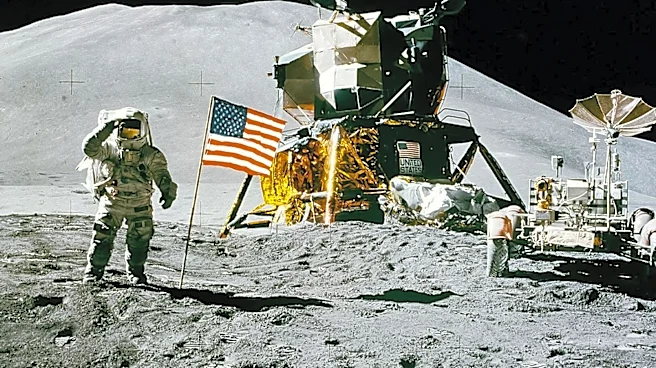
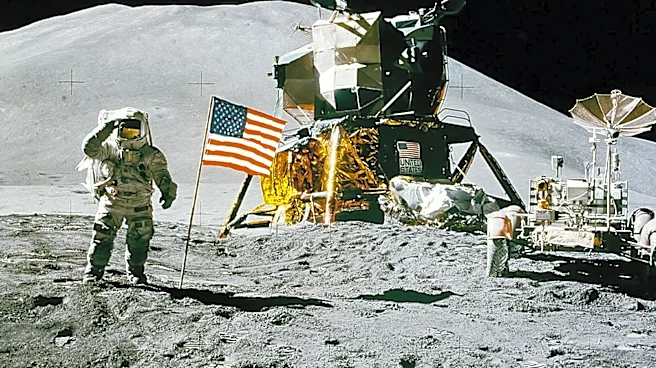
On November 19, Conrad and Bean began their powered descent to the lunar surface. Conrad had trained to recognize a pattern of craters known as "the Snowman," with the Surveyor crater at its center, during the "pitchover" maneuver. He was astonished to see the Snowman exactly where it should be, confirming they were directly on course. Taking manual control, Conrad aimed for an area near Surveyor crater dubbed "Pete's Parking Lot," but found the terrain rougher than expected. He maneuvered the Lunar Module, Intrepid, and landed it at 06:54:36 UTC, just 535 feet (163 meters) from the Surveyor probe. This precise landing was a major achievement, validating NASA's ability to target specific locations on the Moon.
During their two moonwalks, Conrad and Bean conducted extensive surface activities. They deployed the Apollo Lunar Surface Experiments Package (ALSEP), a suite of nuclear-powered scientific instruments designed to operate autonomously and send data back to Earth. This included a Lunar Surface Magnetometer, a Lunar Atmosphere Detector, a Lunar Ionosphere Detector, and a Solar Wind Spectrometer, among others. They also collected 73.75 pounds (33.45 kg) of lunar samples. A highlight of their surface operations was the visit to Surveyor 3. Approaching cautiously, they found the footing solid and the probe stable. They collected several pieces of Surveyor, including its television camera, for return to Earth, allowing scientists to study the effects of the lunar environment on man-made objects. The mission concluded with a successful splashdown, demonstrating both the resilience of the spacecraft and the skill of the crew in overcoming significant challenges.