







Hair accessories have played a significant role in human culture for millennia, serving not only practical purposes like holding hair in place but also as powerful symbols of status, identity, and fashion. From the earliest known combs to the intricate kanzashi of Japan, these items reflect technological advancements, artistic expression, and societal norms across different eras and regions. The evolution of hair accessories showcases a continuous
blend of utility and ornamentation, adapting to changing hairstyles and cultural practices while retaining their fundamental importance in personal grooming and adornment.
Ancient Roots: Combs and Ribbons
The comb stands as one of humanity's oldest tools, with archaeological discoveries revealing highly refined forms from settlements in Persia dating back 5000 years. These early combs, typically flat and toothed, were essential for straightening and cleaning hair or other fibers, highlighting their fundamental role in personal hygiene and grooming from ancient times. Their enduring design speaks to their effectiveness and necessity across diverse cultures and historical periods.Ribbons, too, have a long and varied history. These thin bands of flexible material, often cloth but also plastic or metal, have been used for countless purposes beyond just hair. Historically, ribbons made from materials like silk were frequently incorporated into dress and served numerous ornamental and symbolic functions. Cultures worldwide have utilized ribbons in their hair, around the body, and as decorations on animals, buildings, and other objects, demonstrating their versatility and widespread appeal as a decorative and functional accessory.
Functional Fasteners: Elastics, Barrettes, and Headbands
As hairstyles became more complex and required greater hold, functional fasteners evolved. Hair elastics, known in some regions as binder, elastic band, or gumband, are short loops of rubber and latex. In the U.S., they are commonly called hair ties and are often covered with fabric. These bands are primarily used to secure ponytails and braids, providing a simple yet effective way to manage and style hair.Barrettes, also referred to as hair-slides in British English or hair clips in Australian English, are clasps or pins designed to hold hair in place. They are worn in various sizes, with smaller ones typically placed at the front and larger ones at the back. Barrettes serve both practical functions, such as keeping hair out of the eyes or securing a hairstyle, and ornamental ones, adding a decorative touch to an overall look. Headbands, sometimes called Alice bands, are another versatile accessory worn in the hair or around the forehead. They usually consist of a loop of elastic material or a horseshoe-shaped piece of flexible plastic or metal. Headbands are used to hold hair away from the face or eyes and come in assorted shapes and sizes for both practical and fashion purposes.
Cultural Ornaments: The Art of Kanzashi
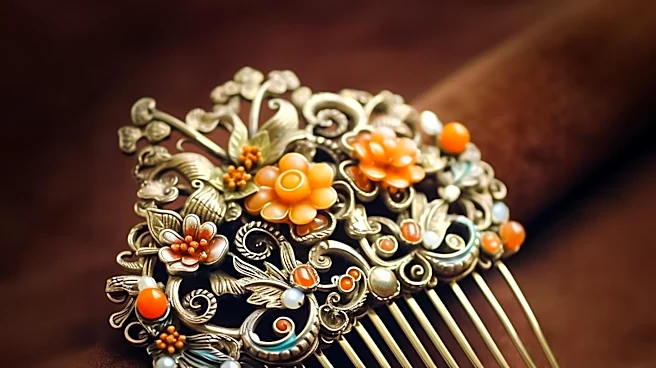
Perhaps one of the most culturally rich hair accessories is the kanzashi, traditional hair ornaments used in Japanese hairstyles. Kanzashi first emerged when Japanese women transitioned from the long, straight taregami hairstyle to more coiffured nihongami styles. Their use became widespread during the Edo period, a time when artisans began producing increasingly finely crafted pieces. While primarily ornamental, some believe kanzashi may have also served as defensive tools in emergencies.Today, kanzashi are most frequently worn by brides and professional kimono wearers, such as geisha, tayu, and yujo, as well as by practitioners of Japanese tea ceremony and ikebana. There is also a contemporary revival among young Japanese women who incorporate kanzashi to add an elegant touch to modern attire. These ornaments are crafted from a wide array of materials, including lacquered wood, gold and silver-plated metal, tortoiseshell, silk, and more recently, plastic. Early bakelite kanzashi are particularly collectible. The way a geisha wears her kanzashi, including its type and placement, immediately conveys her status to an informed audience, with maiko (apprentice geisha) typically wearing more numerous and elaborate kanzashi than older geisha.