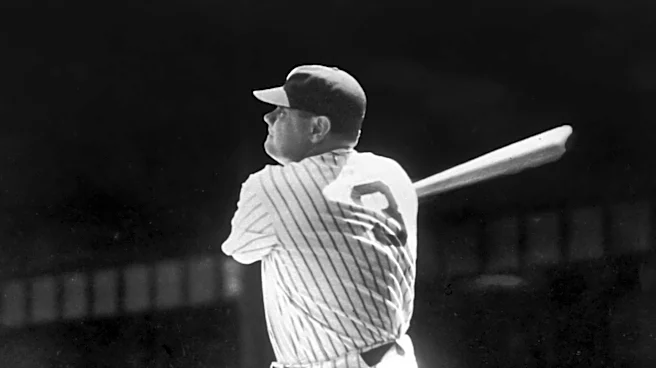



Babe Ruth, one of baseball's most legendary figures, faced a formidable opponent in his final years: cancer. Known for his larger-than-life persona and incredible achievements on the baseball field, Ruth's battle with illness marked a poignant chapter in his life. This article delves into Ruth's struggle with cancer, his enduring legacy, and the impact of his passing.
The Diagnosis and Struggle
In 1946, Babe Ruth was diagnosed with nasopharyngeal carcinoma, a type of throat
cancer. This diagnosis came as a shock to the sports world and to Ruth himself, who had been a symbol of vitality and strength throughout his career. The cancer was linked to his lifelong tobacco use, a common habit among athletes of his era. Despite the grim prognosis, Ruth faced his illness with the same determination that characterized his baseball career.
Ruth underwent various treatments in an attempt to combat the disease. These included surgery and radiation therapy, which were the standard medical responses to cancer at the time. However, the treatments took a toll on his health, and Ruth's once robust physique began to weaken. Despite his declining health, Ruth remained a public figure, attending events and making appearances that demonstrated his enduring spirit.
Public Appearances and Legacy
Even as his health deteriorated, Babe Ruth continued to make public appearances, maintaining his connection with fans and the baseball community. One of his most memorable appearances was at Yankee Stadium in 1947, where he attended a ceremony in his honor. The event, known as Babe Ruth Day, drew a massive crowd, all eager to pay tribute to the man who had transformed baseball into America's pastime.
Ruth's presence at the stadium, despite his frail condition, was a testament to his enduring popularity and the deep affection fans held for him. His ability to inspire and captivate audiences remained undiminished, even as he faced the greatest challenge of his life. Ruth's legacy as a baseball icon was solidified during these final years, as he continued to embody the spirit of the game.
The End of an Era
Babe Ruth passed away on August 16, 1948, at the age of 53. His death marked the end of an era in baseball, as fans and players alike mourned the loss of a true legend. Ruth's funeral was held in New York City, drawing thousands of mourners who lined the streets to pay their respects. The outpouring of grief and admiration was a testament to Ruth's impact on the sport and on American culture.
Ruth's battle with cancer and his eventual passing highlighted the vulnerability of even the most celebrated figures. His courage in the face of illness and his unwavering connection to the game of baseball left an indelible mark on the sport. Babe Ruth's legacy continues to inspire generations of athletes and fans, reminding us of the power of perseverance and the enduring spirit of a true champion.