



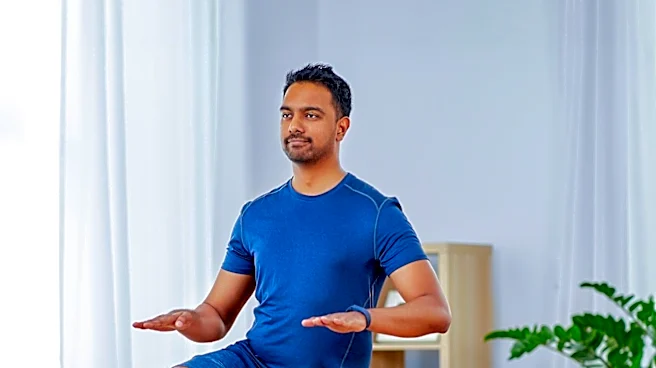

Modern yoga practice often features a wide array of physical postures, known as asanas, many of which are widely perceived as ancient traditions. However, a closer look at their history reveals that numerous popular asanas are relatively recent creations, some even originating in the 20th and 21st centuries. This evolution highlights a dynamic aspect of yoga, where new poses are continuously developed and integrated into practice, often reflecting
changing understandings and goals within the discipline. The naming conventions of these newer poses also offer clues to their more contemporary origins, often describing the body's position rather than referencing ancient figures or animals.
The Recent Genesis of Familiar Poses
Many asanas that are now staples in yoga classes have surprisingly modern origins. For instance, Virabhadrasana I, commonly known as Warrior Pose I, is not an ancient posture but was likely devised by Krishnamacharya around 1940. This pose gained widespread popularity through his pupil, B.K.S. Iyengar, who significantly influenced the global spread of modern yoga. Similarly, Parivritta Parsvakonasana, or Revolved Side Angle Pose, is even more recent; it was not included in the first edition of Pattabhi Jois's influential text, *Yoga Mala*, published in 1962. This indicates that its development occurred sometime after that period, showcasing the ongoing innovation within yoga.
Even more contemporary is Viparita Virabhadrasana, or Reversed Warrior Pose, which may have been created after the year 2000. This continuous creation of new poses demonstrates that yoga is not a static practice but one that adapts and expands over time. Other widely practiced standing asanas, such as Trikonasana (triangle pose) and even the Dog Pose, also made their first appearance in the 20th century. The very concept of sequencing asanas, as seen in practices like Surya Namaskar (Sun Salutation), is also a 20th-century development, further illustrating the modern evolution of yoga practice.
Naming Conventions and Descriptive Asanas
The naming of asanas provides an interesting insight into their historical context. While many traditional asanas are named after objects, legendary figures, or animals—such as Vrikshasana (tree pose), Matsyendrasana (the sage Matsyendra's pose), or Kurmasana (tortoise pose)—a significant number of newer poses adopt a more descriptive approach. B.K.S. Iyengar's *Light on Yoga*, published in 1966, described approximately 200 asanas, including about 50 main poses and their variations. Of these, a striking 83 have names that simply describe the body's position, such as Utthita Parsvakonasana, meaning "Extended Side Angle Pose."
This descriptive naming pattern suggests that these poses were developed later, as noted by scholar Mark Singleton. A more recent example following this pattern is Shatkonasana, or "Six Triangles Pose," described in 2015. The trend of creating and naming new poses has continued, with figures like Dharma Mittra illustrating 908 poses and variations in his 1984 *Master Yoga Chart*, and many more emerging since then. This evolution in naming reflects a shift from symbolic or mythological references to a more functional description of the physical form, aligning with the modern emphasis on precise bodily alignment and movement.
Variations and Branded Yoga Styles
The development of asanas also includes significant variations within established poses, often seen across different yoga styles. For example, in Bikram Yoga, a fixed sequence of 26 poses developed by Bikram Choudhury, Trikonasana is the ninth pose and is intended to focus on opening the hips. However, the Bikram version of Trikonasana is actually Parsvakonasana, a different pose from the one practiced in Iyengar Yoga. This highlights how different schools or "brands" of yoga interpret and adapt poses, sometimes even using the same name for distinct physical forms or emphasizing different aspects of a pose.
In Bikram Yoga, specific details like the position of the feet, proper breathing, and weight distribution are considered critically important, with about 30% of weight on the back foot and 70% on the front foot. This level of detail in instruction and the existence of branded sequences further underscore the modern, structured approach to asana practice. Beyond these branded styles, many independent teachers, particularly in places like Britain, offer unbranded "hatha yoga," which often incorporates a diverse range of these evolving asanas, reflecting the broad and dynamic landscape of contemporary yoga.