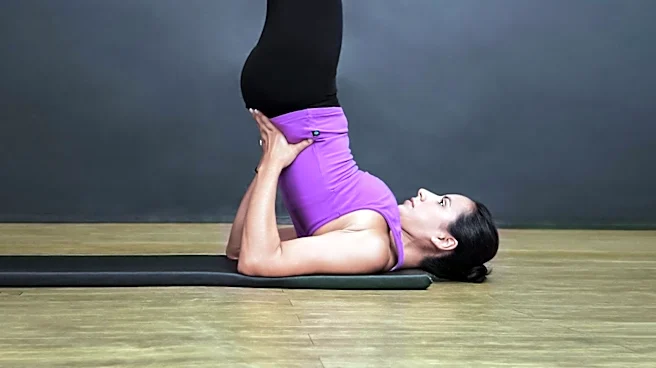



Sarvangasana, often translated from Sanskrit as "posture of the whole body" and known in English as the shoulderstand, is a fundamental yoga asana. This pose involves supporting the body's weight primarily on the head, neck, upper back, and upper arms, with the legs and lower body extended upwards. It is a posture that many practitioners find beneficial, largely due to the head being positioned below a significant portion of the body. While experienced
yogis might hold this pose for extended periods, even up to several hours, it is crucial to approach it with caution due to the considerable weight placed on the cervical vertebrae, which carries a risk of neck injury.
Executing the Shoulderstand
The execution of Sarvangasana begins with the practitioner lying on their back. From this supine position, both hands are placed under the middle of the back to provide support. The legs and the lower body are then brought up into the air, creating the characteristic inverted shape of the shoulderstand. During the pose, the eyes are directed towards the toes, and it is important to maintain a steady head position, avoiding any side-to-side turning. This careful alignment helps to distribute the body's weight and minimize strain on the neck.
The primary support for the body in Sarvangasana comes from the head, neck, upper part of the back, and the upper arms. This distribution of weight is what makes the pose both effective and potentially challenging. The sustained inversion and the specific points of support contribute to the pose's unique physiological effects. Understanding these mechanics is key to practicing Sarvangasana safely and effectively, especially for those who are new to the posture or have pre-existing neck conditions.
Variations and Advanced Practices
For those seeking a slightly safer approach to the traditional Sarvangasana, the Salamba Sarvangasana, or Supported Shoulderstand, offers an alternative. This variation incorporates additional support, which can help to alleviate some of the pressure on the neck, making it more accessible for a wider range of practitioners. The supported version allows individuals to experience the benefits of the inversion with reduced risk, particularly for the cervical spine.
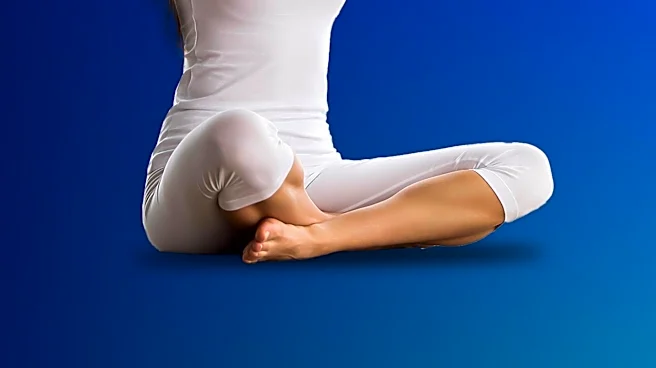
Beyond the basic and supported forms, there are also more advanced shoulderstand variations designed for experienced practitioners. These include Padma Sarvangasana, known as the Lotus Shoulderstand, and Ekapa Sarvangasana, or the One-legged Shoulderstand. These advanced poses require greater flexibility, strength, and balance, building upon the foundational principles of Sarvangasana. The Lotus Shoulderstand, for instance, integrates the lotus leg position while inverted, demanding significant hip flexibility. The One-legged Shoulderstand, as its name suggests, involves extending one leg while maintaining the inverted balance, adding an element of unilateral strength and stability. These variations are typically introduced after a practitioner has mastered the basic shoulderstand and developed the necessary physical capabilities.
Role in Yoga Sequences
Sarvangasana often plays a significant role within a broader yoga sequence. It is sometimes used as an introductory pose or a follow-up pose for back-bending postures, such as Setu Bandha Sarvangasana, also known as the Bridge pose. This strategic placement within a sequence highlights its versatility and its ability to prepare the body for other asanas or to help in counterbalancing their effects. The shoulderstand's inverted nature can help to reset the body and mind, making it a valuable component in a well-rounded yoga practice. The transition from a backbend to an inversion like Sarvangasana can help to lengthen the spine and promote circulation, contributing to the overall balance and harmony of the practice.