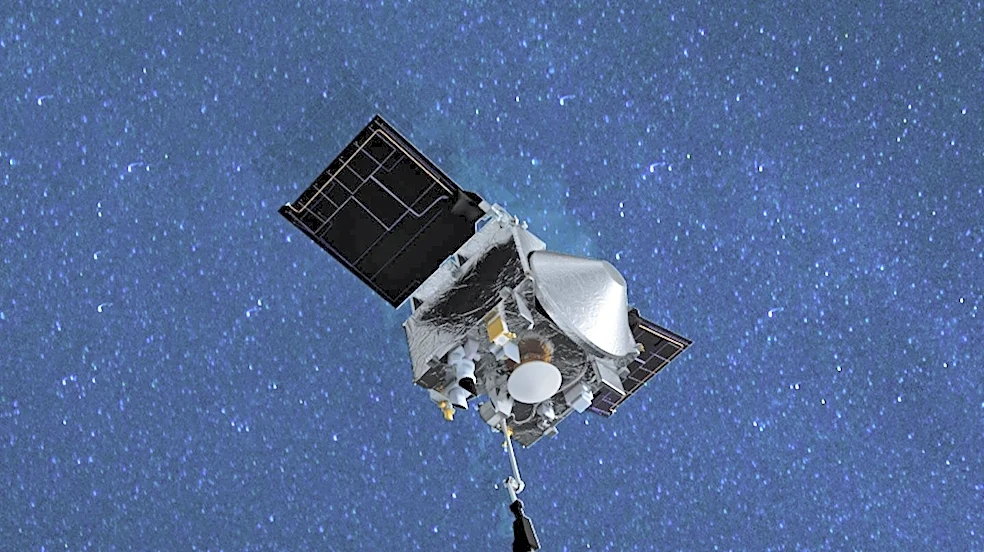








The OSIRIS-REx mission, an acronym for Origins, Spectral Interpretation, Resource Identification, Security, Regolith Explorer, represents a significant endeavor by NASA to explore the early history of our solar system. Launched on September 8, 2016, its primary objective was to journey to the near-Earth asteroid 101955 Bennu, collect samples, and return them to Earth. This ambitious mission aimed to provide scientists with invaluable material that
could shed light on the formation and evolution of the Solar System, the initial stages of planet formation, and the potential sources of organic compounds crucial for the emergence of life on Earth.
Why Bennu? A Time Capsule from the Early Solar System
Bennu was specifically chosen as the mission's target due to its unique characteristics, which make it a "time capsule" from the birth of the Solar System. This asteroid possesses a very dark surface and is classified as a B-type asteroid, a subtype of the more common C-type carbonaceous asteroids. Such asteroids are considered primitive, meaning they have undergone minimal geological alteration since their formation. This pristine state is critical for scientific study, as it suggests that Bennu's material has largely preserved its original composition from billions of years ago.
The selection of Bennu was particularly driven by the availability of virgin carbonaceous material, a key component in the organic molecules necessary for life. This material is also representative of the matter that existed before Earth's formation. Previous studies of meteorites and comets have revealed organic molecules, such as amino acids, indicating that some of life's essential ingredients can naturally synthesize in space. By studying Bennu's samples, scientists hope to gain a deeper understanding of how these organic compounds were distributed throughout the early Solar System and potentially contributed to life on Earth.
Mission Timeline and Sample Acquisition
The OSIRIS-REx spacecraft embarked on a meticulously planned journey. After its launch, it performed a flyby of Earth on September 22, 2017, before finally rendezvousing with Bennu on December 3, 2018. The subsequent two years were dedicated to an extensive analysis of Bennu's surface, meticulously mapping and surveying it to identify a suitable site for sample collection. This detailed reconnaissance phase was crucial, as the mission required a precise and safe location for the delicate sample acquisition process.
On October 20, 2020, OSIRIS-REx successfully touched down on Bennu and collected a sample. The spacecraft then departed from Bennu on May 10, 2021, beginning its return journey to Earth. The precious sample material was successfully delivered to Earth on September 24, 2023. Following the completion of its primary mission, OSIRIS-REx was repurposed for an extended mission, now known as OSIRIS-APEX, which will involve studying asteroid 99942 Apophis, with arrival anticipated in April 2029.
Cost and Program Context
The OSIRIS-REx mission represents a significant investment in planetary science. The estimated cost of the primary mission was approximately 800 million U.S. dollars, not including the cost of the Atlas V launch vehicle, which was around 183.5 million U.S. dollars. The extended OSIRIS-APEX mission adds another 200 million U.S. dollars to the total. This mission is the third planetary science mission selected under NASA's New Frontiers Program, following the successful Juno and New Horizons missions. The New Frontiers Program focuses on medium-class planetary science investigations that address high-priority science goals identified by the scientific community.