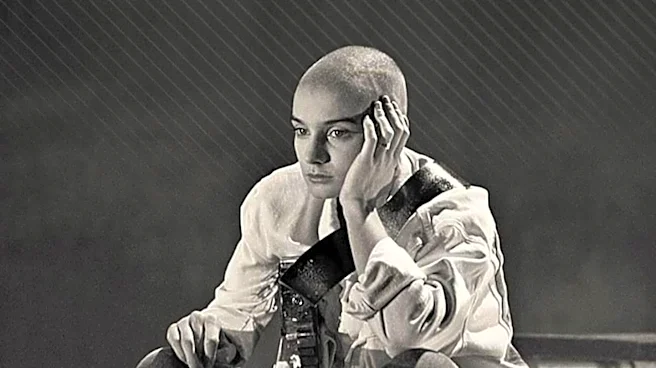

Sinéad O'Connor's appearance on *Saturday Night Live* on October 3, 1992, transcended a typical musical guest spot, evolving into a pivotal moment of protest that reverberated globally. Her act of tearing
a photograph of Pope John Paul II while declaring "fight the real enemy" was a direct challenge to the Catholic Church over child abuse. This bold statement, made on a major American television platform, ignited a firestorm of public debate and had significant repercussions for O'Connor's career and public image.
Immediate Backlash and Subsequent Performances
The immediate reaction to O'Connor's protest was intense and largely negative. The director of SNL, Dave Wilson, reportedly felt that O'Connor had "railroaded" the crew and producers, leading him to instruct that the audience applause light not be illuminated after her performance. This indicated the shock and disapproval felt even within the production. The incident quickly became one of the most infamous moments in SNL's history, drawing widespread media attention and public condemnation.
Just two weeks after her SNL appearance, O'Connor was scheduled to perform at the 30th-anniversary tribute concert for Bob Dylan at Madison Square Garden in New York City. Introduced by actor and country singer Kris Kristofferson as an "artist whose name has become synonymous with courage and integrity," O'Connor was met with a chorus of boos from the audience. Despite the hostile reception, she stood with her head bowed, refusing to be intimidated. Kristofferson, who was meant to escort her off stage, instead whispered words of encouragement: "Don't let the bastards get you down." O'Connor's defiant response, "I'm not down," underscored her resolve in the face of public outcry.
O'Connor's Broader Activism and Personal Philosophy
O'Connor's protest on SNL was not an isolated incident but rather consistent with her outspoken public image and history of activism. She had previously drawn attention to issues such as child abuse, human rights, racism, and women's rights throughout her career. Her willingness to openly discuss her spiritual journey, socio-political viewpoints, and struggles with mental health often placed her in the spotlight, sometimes controversially. She once stated, "I don't do anything in order to cause trouble. It just so happens that what I do naturally causes trouble. I'm proud to be a troublemaker."
This philosophy informed her actions, including her refusal in 1990 to perform if the U.S. national anthem was played before her concerts, citing her belief that the American music industry was racist. This stance drew criticism from figures like Frank Sinatra. The SNL protest, therefore, was another manifestation of her commitment to using her platform to address what she perceived as significant societal injustices, regardless of the personal cost. The muted commercial success of her album "Am I Not Your Girl?" following the SNL incident, particularly when coupled with other controversies, marked a turning point in the commercial momentum of her career.