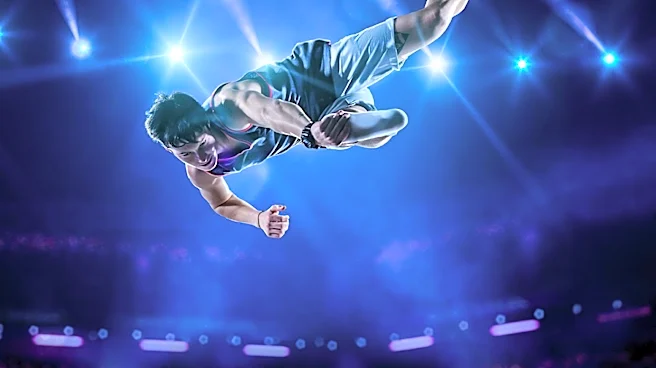





SlamBall, a dynamic hybrid sport that blends elements of basketball, American football, hockey, and gymnastics, emerged from a creative spark in 1999. Conceived by Mason Gordon, who was then working for Tollin/Robbins Productions, the sport was initially just an idea sketched on a napkin. Gordon, inspired by video games, envisioned a sport that combined the fluid motion of basketball with the physical contact of American football. This innovative
concept laid the groundwork for a game played on a court featuring four trampolines in front of each net and boards lining the court's edge, allowing for high-flying, contact-rich action.
The Genesis of a New Game
Mason Gordon's vision for SlamBall was not just a fleeting thought; it was a deliberate attempt to create a sport that captured the excitement and intensity he found in video games. His napkin sketch outlined a game that would incorporate trampolines to elevate players, enabling spectacular dunks and mid-air collisions. When he presented this idea to his boss, movie and television producer Mike Tollin, Tollin recognized the potential, believing Gordon was "onto something." This early endorsement was crucial, as Tollin helped finance the construction of the first prototype court. This initial court was set up in an East Los Angeles warehouse, marking the physical beginning of SlamBall.
The construction of the prototype court was a significant step, but the next challenge was finding the right athletes to bring the game to life. Gordon sought out street basketball players, looking for individuals who possessed not only skill and strength but also the ability to compete comfortably while launching off trampolines and engaging in physical play in the air. This unique combination of athletic requirements meant that traditional basketball players might not be the perfect fit, necessitating a search for those who could adapt to the sport's distinct demands.
Early Players and Exhibition Games
Gordon successfully recruited five pioneering players: James Willis, Sean Jackson, David Redmond, Michael Goldman, and Jeff Sheridan. These individuals, along with Gordon himself, formed the core group that trained to develop the sport's initial gameplay. They were instrumental in shaping the early dynamics and strategies of SlamBall. These six original players were then divided into the first two teams: the Los Angeles Rumble and the Chicago Mob. This marked the beginning of competitive play for the nascent sport.
In 2001, these two foundational teams engaged in an exhibition series, which the Chicago Mob ultimately won. This series provided valuable insights into the game's potential and helped refine its rules and flow. Following this initial success, more players were brought into the fold, including notable names like Stan Fletcher, Rob Wilson, and Dion Mays. The growing roster of athletes indicated a burgeoning interest and the potential for expansion beyond the initial group of pioneers.
Expanding the Roster and Formalizing the Sport
As the game gained traction in Los Angeles, particularly among street basketball players, the interest in SlamBall grew rapidly. Within a year of its inception, approximately 400 individuals had expressed interest in becoming potential players. This surge in popularity led to the organization of open tryouts, a crucial step in formalizing the selection process for athletes. The criteria for selection were rigorous, focusing on athletic ability, body control, and court awareness, all essential for navigating the unique environment of a SlamBall court.
The pool of potential players was eventually narrowed down to about 60 individuals. These selected athletes participated in the first-ever SlamBall combine in 2002. During this combine, players and coaches alike underwent training to learn the game's safety protocols, fundamental rules, and basic strategies. This period was vital for establishing a standardized approach to playing and coaching, ensuring that as the sport grew, it maintained a consistent level of play and safety. The combine also served as a platform for players to hone their skills in the trampoline-assisted, contact-heavy environment, preparing them for the sport's public debut.
Television Debut and Initial League Structure
SlamBall made its significant television debut in 2002 on The National Network, which later became Spike TV and is now known as the Paramount Network. This broadcast marked a major milestone for the sport, bringing it to a wider audience. The league's visibility was further boosted by the involvement of former Philadelphia 76ers owner Pat Croce, who joined as a partner. The inaugural season featured six teams: the Bouncers, Diablos, Mob, Rumble, Slashers, and Steal, showcasing the competitive structure of the new league.
Adding to the professional presentation, former NBA All-Star Reggie Theus served as both studio co-host and color commentator for the televised games. His presence lent credibility and familiarity to the new sport, helping to bridge the gap between traditional basketball fans and the innovative world of SlamBall. The league continued for a second season in 2003, further solidifying its presence in the sports entertainment landscape. However, after this second season, a disagreement between creator Mason Gordon and co-producer Telepictures Productions led to the dissolution of the league, temporarily halting its momentum. Despite this setback, the foundational work of these early years established SlamBall as a unique and exciting athletic endeavor.