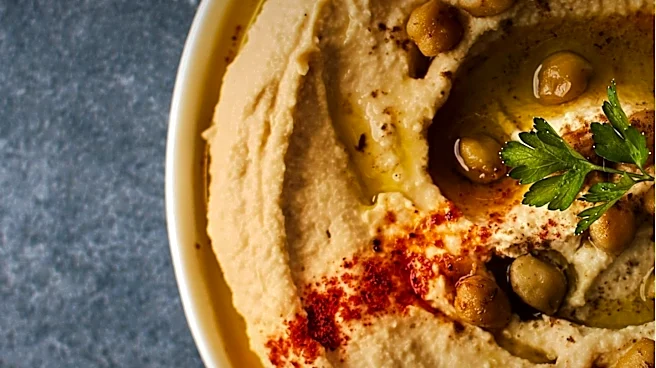









Hummus, a seemingly simple blend of chickpeas, tahini, lemon juice, and garlic, has become more than just a popular dip; it is a focal point in discussions about national identity and cultural ownership in the Middle East. While widely enjoyed across the Levant and beyond, its status as an unofficial "national dish" in Israel has sparked controversy, with critics from Lebanon, Palestine, and other Arab cultures describing it as an appropriation of their
culinary heritage. This debate highlights how food, deeply intertwined with cultural practices and history, can become a symbol in broader geopolitical narratives.
The dish itself has deep roots in the region. Chickpea dishes have long been a part of the cuisine of Jewish communities in the Middle East and North Africa. Mizrahi Jewish immigrants from these Arabic-speaking lands brought their own unique variations of hummus, such as versions with fried eggplant and boiled eggs prepared by Iraqi Jews. This historical presence suggests a shared culinary tradition that predates modern national boundaries, yet the contemporary discourse often frames it in terms of exclusive ownership.
Hummus as a Symbol of National Identity
In Israel, hummus is undeniably popular and holds significant cultural weight, often seen as an unofficial "national dish." Its ingredients adhere to Kashrut, Jewish dietary laws, allowing it to be combined with both meat and dairy meals, which further integrates it into daily life. The industrialization of hummus by Israeli private companies, beginning in 1958, played a crucial role in its widespread availability and consumption, solidifying its place in the national diet.
However, this strong association with Israeli identity is precisely what fuels the debate. Critics argue that presenting hummus as an Israeli national dish overlooks its long-standing presence and significance in Lebanese, Palestinian, and broader Arab cultures. This perspective views the Israeli claim as an act of cultural appropriation, where a food deeply embedded in one culture's history is adopted and rebranded by another, particularly in a context of political conflict.
The Role of Industrialization and Cultural Blending
According to scholars Ofra Tene and Dafna Hirsch, the dispute over hummus ownership reveals how nationalism can manifest through food. The industrialization of hummus by Israeli companies is seen as a key factor in this dynamic. While hummus was traditionally part of the cuisine of Mizrahi Jews, its popularity also spread among Jewish immigrants from Europe in the late 19th and early 20th centuries. Historian Dafna Hirsch suggests that the adoption of hummus into their diet was part of an effort to blend into the Middle Eastern cultural landscape.
This blending, however, does not negate the claims of appropriation from other cultures. The debate underscores the complex interplay between culinary traditions, migration, industrial production, and national narratives. It illustrates how a food item, cherished by many, can become a contested symbol, reflecting deeper tensions and historical grievances over cultural heritage and identity in a region marked by diverse populations and intertwined histories.