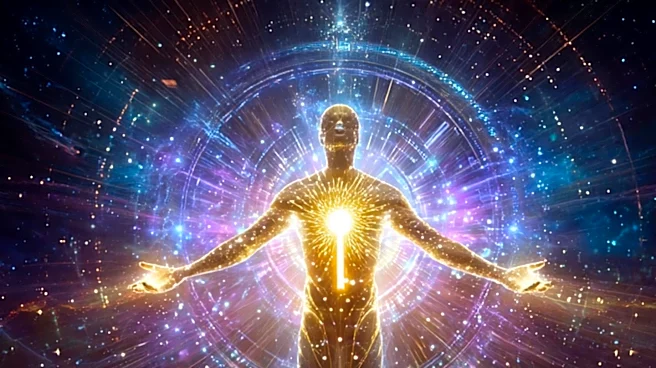








In the rich tapestry of ancient Indian traditions, particularly yoga, Ayurveda, and Indian martial arts, a fundamental concept known as prana (प्राण, prāṇa) plays a central role. This Sanskrit term translates to breath, life force, or vital principle, and it is understood to permeate all levels of reality, extending even to inanimate objects. Hindu literature sometimes describes prana as originating from the Sun, serving as a connective force among
the elements. This vital energy is not a singular entity but is often categorized into five distinct types, collectively referred to as the five vāyus, or "winds," each with specific locations and responsibilities within the body and mind.
Understanding Prana: More Than Just Breath
While often translated as breath, prana encompasses a much broader meaning as the fundamental life force. V.S. Apte's extensive work on Sanskrit provides fourteen different meanings for prāṇa, including respiration, the breath of life, vital air, and the principle of life itself. In this sense, it is often discussed in the plural, referring to various vital airs, though the number can vary from three to ten, with five being the most commonly assumed. Scholars like Bhattacharyya use the concept of "vital air" to describe prana as it is utilized in Sanskrit texts concerning pranayama, the practice of breath manipulation. Thomas McEvilley further translates prāṇa as "spirit-energy," highlighting its subtle yet powerful nature. Beyond just the air we breathe, prana is believed to be present in the blood and is thought to be most concentrated in semen and vaginal fluid, indicating its deep connection to life-giving processes.The Five Vayus: Specialized Manifestations of Prana
Within Hindu texts, particularly in Ayurveda, tantra, and Tibetan medicine, prana is further understood through its five primary manifestations, known as the vāyus. The term vāyu itself means "wind" or "air" in Sanskrit. Prāṇa vāyu is considered the foundational vāyu from which all others arise, and it is also one of the five major vāyus. These five major vāyus are prāṇa, apāna, uḍāna, samāna, and vyāna, each governing different physiological and energetic functions.Prāṇa vāyu, located in the head, lungs, and heart, is responsible for inward and upward movement. It is the vital life force itself, and when balanced, it leads to a calm mind and stable emotions. Apāna vāyu, situated in the lower abdomen, governs outward and downward movements, relating to elimination, reproduction, and skeletal health through nutrient absorption. A balanced apāna supports healthy digestive and reproductive systems. Udāna vāyu, found in the diaphragm and throat, moves upward and is linked to respiratory functions, speech, and brain activity. Its balance contributes to a healthy respiratory system, clear speech, a healthy mind, good memory, and creativity.