




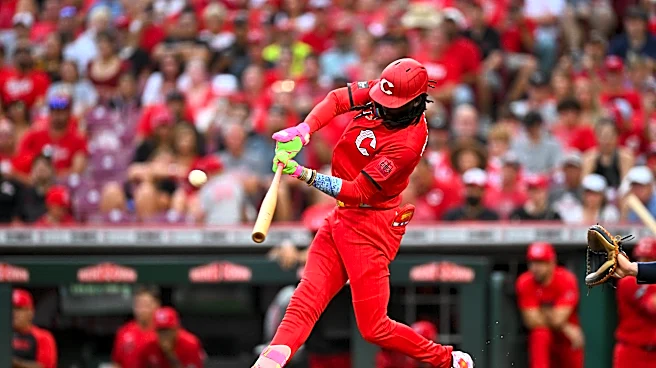
Pete Rose, a prominent figure in Major League Baseball, concluded his playing career and began his managerial journey with a significant return to the Cincinnati Reds. After a brief stint with the Montreal Expos in 1984, Rose rejoined the team where he had achieved much of his early fame. This period, from 1984 to 1986, marked a unique chapter in baseball history, as Rose served as the sport's most recent player-manager. His time in this dual role
was characterized by his continued pursuit of hitting records and the strategic decisions that came with leading a team.
The Return to Cincinnati and the Player-Manager Role
Rose's return to the Cincinnati Reds in 1984 was a notable event, especially as he took on the responsibilities of a player-manager. This dual role, where an active player also manages the team, had become increasingly rare in Major League Baseball. Rose's tenure as player-manager with the Reds lasted from 1984 through 1986. During this time, he was not a full-time player, but rather a part-time one, a shift from how some earlier player-managers operated.
This arrangement was partly driven by Rose's ambition to extend his playing career and surpass Ty Cobb's all-time hit record. Reds owner Marge Schott recognized the marketing potential of this pursuit, leveraging Rose's quest for the record to generate interest. The player-manager role allowed Rose to continue playing while also guiding the team from the dugout, a demanding position that required balancing his own performance with the strategic needs of the club.
Milestones and the End of a Playing Career
Before his return to Cincinnati, Rose had already achieved a significant milestone in 1984. On April 13, the 21st anniversary of his first career hit, he doubled off Jerry Koosman of the Phillies for his 4,000th career hit. This achievement made him only the second player in MLB history, alongside Ty Cobb, to reach the 4,000-hit club. This moment underscored his enduring ability as a hitter, even as his career was nearing its end.
His playing career officially concluded in 1986. After the 1986 season, Rose removed himself from the 40-man roster to create a spot for Pat Pacillo. This move effectively marked his unofficial retirement as a player. While he stopped playing, he continued in his managerial capacity for the Reds until 1989, when he was banned from baseball following the release of the Dowd Report. His time as a player-manager in Cincinnati remains a distinctive part of his storied career, highlighting his dedication to the game both on and off the field.
The Rarity of the Player-Manager in Modern Baseball
Pete Rose stands out in baseball history as the most recent player-manager in Major League Baseball. The practice of a player also managing the team was once common, dating back to figures like John Clapp in 1872. However, by the time Rose took on the role, it had become an anomaly. The increasing complexity of the manager's job, with specialized bullpens, extensive scouting reports, and heightened media scrutiny, made the dual role more challenging.
One criticism of the player-manager model is the difficulty for the manager to focus on strategic decisions while also playing. Additionally, a player-manager faces the unique challenge of deciding how much playing time to allocate to themselves. Despite these challenges, Rose embraced the role, further cementing his legacy as a unique and impactful figure in baseball.