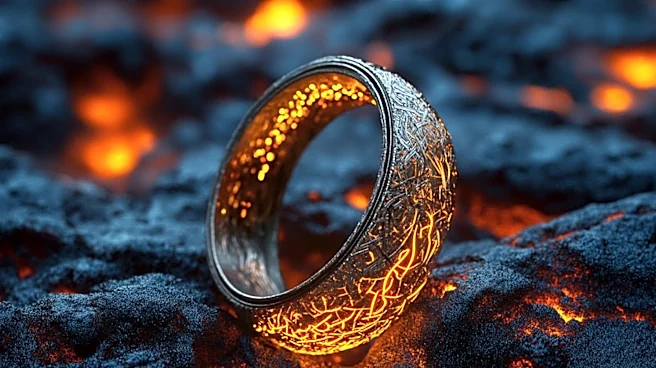


"The Lord of the Rings: The Rings of Power," an American fantasy television series set in Middle-earth's Second Age, premiered on Amazon Prime Video on September 1, 2022. Its release was met with significant anticipation, given the beloved source material and the substantial investment made by Amazon. The series' reception has been a complex tapestry of critical acclaim, audience enthusiasm, and notable controversies, reflecting the challenges of adapting
a cherished literary world for a contemporary global audience. Understanding these responses provides insight into the show's impact and its journey through its initial seasons.
Initial Viewership and Critical Acclaim
The first season of "The Rings of Power" was released through October 2022 and quickly established itself as the most-watched original series on Prime Video. This strong initial viewership indicated a high level of public interest and a successful launch for Amazon's ambitious project. Critics generally offered positive reviews, with particular praise directed at the series' visual presentation and overall design. The show's ability to create a visually stunning rendition of Middle-earth was a recurring highlight in many professional assessments, suggesting that the significant production budget translated into a high-quality aesthetic experience.
However, alongside the praise for its visuals, there were also criticisms regarding the writing and pacing of the first season. Some reviewers felt that while the show looked impressive, the narrative development and the speed at which the story unfolded could have been improved. These mixed critical reactions highlighted the difficulty of balancing grand spectacle with compelling storytelling, especially when dealing with a narrative as rich and complex as Tolkien's legendarium.
Audience Response and Online Backlash
The audience response to "The Rings of Power" was notably more polarized than the critical reception. Vocal reactions from dedicated Tolkien fans were a prominent feature of the discourse surrounding the series. Many fans, deeply invested in the lore and characters, expressed strong opinions, both positive and negative, about the show's interpretation of Middle-earth. This passionate engagement is typical for adaptations of highly revered fantasy works, where expectations are often very high.
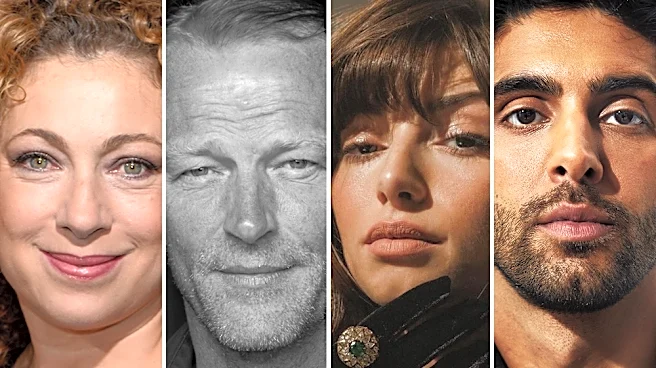
Adding to the complexity of the audience response was an online backlash concerning the diverse cast. This particular controversy generated significant discussion and debate across various online platforms. The inclusion of a diverse cast in a fantasy setting, while celebrated by some, became a point of contention for others, leading to a divided fan base. This aspect of the audience reaction underscored broader cultural conversations about representation in media and the expectations placed upon adaptations of classic works.
Evolution of Reception in Subsequent Seasons
The second season of "The Rings of Power," released from August to October 2024, saw a shift in its reception landscape. Viewership for the second season was lower compared to the first, suggesting that some of the initial broad appeal might have tapered off. The critical response remained largely similar to the first season, continuing to commend the visuals while still noting areas for improvement in writing and pacing. This consistent critical feedback indicates that certain narrative challenges persisted.
However, a notable change was observed in the audience response, which was described as improved. This improvement could suggest that the initial backlash had subsided, or that the series had found a more stable and appreciative audience base. The evolution of both critical and audience reactions across seasons provides valuable insight into the ongoing journey of "The Lord of the Rings: The Rings of Power" as it continues to unfold its epic narrative in Middle-earth's Second Age, with the third season set for release in November 2026.