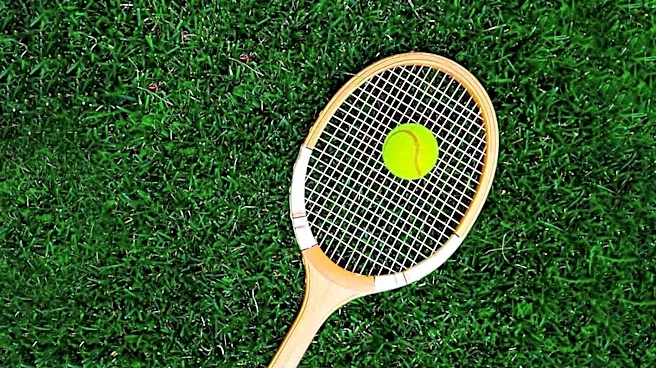







The 1982 Davis Cup marked the 71st iteration of this prestigious international men's tennis tournament, a competition that brings together national teams from across the globe. Known officially as the 1982 Davis Cup by NEC due to sponsorship, this edition was a significant event in the tennis calendar, spanning from March 5 to November 28. The tournament saw a broad participation of 58 teams, divided into various zones and a top-tier World Group,
all vying for the coveted title. Ultimately, the United States emerged victorious, securing their 28th Davis Cup championship by defeating France in a memorable final held in Grenoble.
Structure and Global Participation
The 1982 Davis Cup was structured to accommodate a large number of national teams, reflecting the global reach of men's tennis. The competition was divided into several distinct zones to manage the extensive participation. The premier division was the World Group, which featured 16 of the top national teams. Beyond this elite group, the tournament included regional zones: 22 teams competed in the Europe Zone, 10 in the Americas Zone, and another 10 in the Eastern Zone. This multi-tiered structure allowed for widespread international involvement, with teams progressing through their respective zones with the aim of eventually reaching the World Group or competing within it.
A notable aspect of the 1982 tournament was the debut of Tunisia, marking its first appearance in the Davis Cup. This expansion of participating nations underscored the growing international appeal and inclusivity of the event. The diverse geographical representation, from established tennis powers to emerging nations, highlighted the Davis Cup's role as a truly global tennis championship, fostering competition and camaraderie among countries.
The World Group: A Battle of Tennis Giants
The World Group of the 1982 Davis Cup comprised 16 formidable national teams, representing the pinnacle of men's tennis talent. These teams included Argentina, Australia, Chile, Czechoslovakia, France, Great Britain, India, Italy, Mexico, New Zealand, Romania, Spain, Soviet Union, Sweden, United States, and West Germany. The competition within this group was intense, featuring a knockout format that began with the first round in March and progressed through quarterfinals in July, semifinals in October, and finally the championship match in November.
The United States, as a perennial powerhouse in Davis Cup history, navigated a challenging path through the World Group draw. Their journey to the final involved several key matchups against strong contenders. The format ensured that only the most consistent and resilient teams would advance, setting the stage for a dramatic conclusion to the tournament. The World Group matches were played on various surfaces, including hard courts in Carlsbad, California, indoor carpet in St. Louis, Missouri, and Stockholm, Sweden, and grass in Perth, Australia, showcasing the versatility required of the competing players.
The Road to the Final and U.S. Triumph
The United States' campaign in the 1982 Davis Cup culminated in a decisive victory over France. The final showdown took place from November 26 to 28 at the Palais des Sports in Grenoble, France. The choice of venue and surface, indoor clay, added another strategic dimension to the championship match. The American team demonstrated superior performance throughout the final, ultimately defeating France by a score of 4–1.
This victory marked the 28th Davis Cup title for the United States, solidifying their legacy as one of the most successful nations in the tournament's history. The final match itself featured compelling individual contests. For instance, John McEnroe of the United States faced Yannick Noah of France, with McEnroe winning in four sets. Gene Mayer of the U.S. also secured a victory against Henri Leconte. In doubles, the American pair of Peter Fleming and John McEnroe defeated Henri Leconte and Yannick Noah. These performances collectively contributed to the United States' dominant display and their ultimate triumph in the 71st edition of the Davis Cup.