

Apollo 4, the inaugural flight of the mighty Saturn V rocket, was not just a critical engineering test; it was also a major public event that captivated the world. The sheer scale of the launch vehicle, towering over landmarks like the Statue of Liberty and weighing more than a navy destroyer, generated intense media coverage. This mission represented a significant step forward in humanity's quest for space exploration, drawing widespread attention
and setting the stage for the ambitious lunar missions that would follow. The drama of the launch, coupled with the scientific and technical achievements, made Apollo 4 a memorable milestone.
Public Fascination and Media Frenzy
In the days leading up to the Apollo 4 launch, the Kennedy Space Center (KSC) became a hub for VIPs, including Wernher von Braun, NASA executives, industry leaders, Congressional members, and diplomats. Each NASA center and headquarters had lists of distinguished guests, ensuring a broad representation of interest. These guests witnessed the launch from uncovered bleachers near the Vehicle Assembly Building (VAB), a testament to the raw power and spectacle of the event.
NASA established a dedicated press headquarters in Cocoa Beach, providing accreditation, tours of KSC, and a half-hourly shuttle service for journalists. Extensive telephone facilities were made available at the press site near Launch Complex 39 (LC-39) at NASA's expense. Even KSC workers and their families watched the launch from their work assignments, highlighting the collective excitement. Additionally, 43 exemplary contractor employees were honored with a VIP tour, a social evening with six astronauts, and a prime view of the launch, underscoring the collaborative effort behind the mission. The media, including some from the Soviet Union, struggled to convey the immense size of the Saturn V, often resorting to comparisons with well-known structures and objects to illustrate its unprecedented scale.
The Roar of Liftoff: A Dramatic Launch
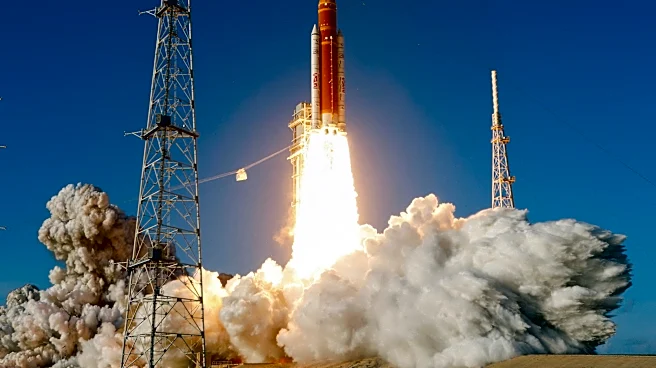
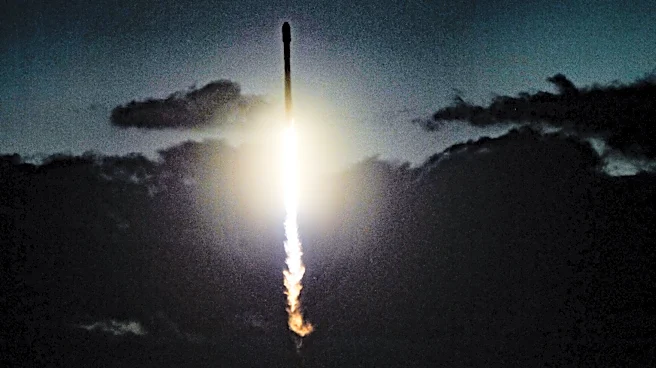
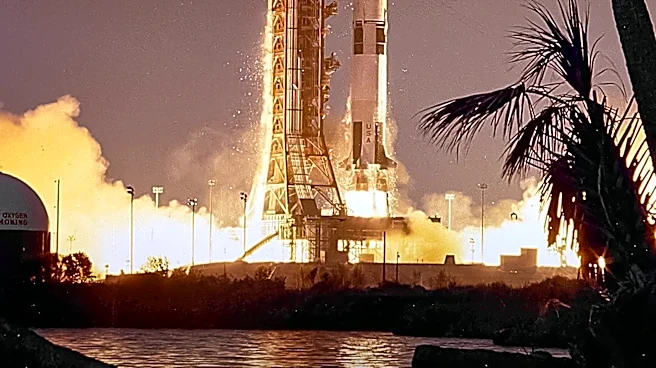
The countdown for Apollo 4 began on November 6, 1967, at 10:30 pm EST, with propellant loading. This involved 89 trailer-truck loads of liquid oxygen, 28 loads of liquid hydrogen, and 27 rail cars of highly refined kerosene. Despite the massive undertaking, only minor problems were encountered, and these did not delay the launch thanks to built-in holds in the countdown. Apollo 4 lifted off on November 9 at 7:00 am EST.
Eight seconds before liftoff, the five F-1 engines ignited, unleashing a tremendous roar that reverberated across the Kennedy Space Center. The sound pressure was far stronger than anticipated, buffeting the VAB, Launch Control Center, and press buildings, even though the launch pads were over five kilometers away. Dust was dislodged from the ceiling of the Launch Control Center, settling on mission controllers' consoles. William Donn of Columbia University described the blast as one of the loudest noises, natural or artificial, in human history, excluding nuclear explosions. CBS commentator Walter Cronkite and producer Jeff Gralnick famously had to brace their trailer's observation window to prevent it from shattering, with Cronkite later calling Apollo 4 the most frightening space mission he had covered.
Mission Accomplished: Flight and Recovery
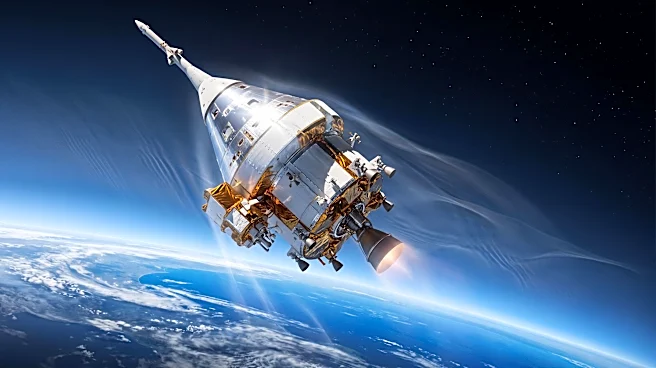
The launch successfully placed the S-IVB third stage and the Command and Service Module (CSM) into a nearly circular 190-kilometer orbit, a nominal parking orbit planned for lunar missions. After two orbits, simulating a trans-lunar injection burn, the S-IVB's first in-space re-ignition propelled the spacecraft into an elliptical orbit with an apogee of 17,218 kilometers. The perigee was deliberately aimed 84.6 kilometers below Earth's surface to ensure a high-speed atmospheric re-entry for the command module and the destruction of the S-IVB.
Shortly after this burn, the CSM separated from the S-IVB and fired its service module engine to adjust its apogee to 18,092 kilometers. Following apogee, the service module engine fired again for 281 seconds, increasing the re-entry speed to 11,168 meters per second at an altitude of 120 kilometers, simulating conditions of a return from the Moon. The CM landed approximately 8.6 nautical miles from its target northwest of Midway Island in the North Pacific Ocean. Its descent was visible from the USS Bennington, the prime recovery ship, which recovered the spacecraft and one of its parachutes within two hours—the first time an Apollo parachute was recovered for inspection. The spacecraft was then taken to Hawaii for deactivation and subsequently to North American's facility in Downey, California, for post-flight analysis.